
Diamond Color Grades – Everything You Need To Know
As one of the 4 C’s, Color is very important when it comes to assessing the quality of a Diamond but what is color when it comes to Diamonds?
That is what I’m going to cover in this post as I break down all the things you need to know about color in Diamonds and it doesn’t matter whether you are just looking to learn or are in the process of buying a Diamond, there is some useful information in here for you.
Just so you know that this isn’t some generic post, I’m Paul Haywood FGA DGA and I’m a fully qualified Gemmologist and Diamond Grader.
What is Color in Diamonds?
Color in Diamonds refers to the body color of the stone and it is split into two categories:
Let’s look at the two categories in a little more detail…
Colorless Diamonds
Over 98% of the world’s Natural Diamonds fall into the ‘colorless’ category but this is where things can get a little confusing, as only a small number of Natural Diamonds are truly colorless.
Most display some hint of color, which is most commonly yellow but can also be brown or grey and stones are graded on how free from color they are, not how tinted they are.
Talking of grading, there are two main grading charts, one developed by CIBJO (The World Jewellery Confederation) and the most commonly used one, which was developed by the GIA in the 1950s and ranges from D (colorless) to Z (tinted).

Why does the GIA scale start at D?
The GIA did this to break from norms, as using the letter D differentiated it from all other grading charts that start with A, which had been problematic, as sellers would market their stones as being AA or AAA quality (as is often seen with Tanzanite) and starting at D helped to stop that.
They couldn’t use a numeric grade as this was used by AGS.
Before we start looking at the color grades in more detail, it is important to know that a Diamond’s color is graded by looking through the pavilion of the stone not the top as this gives a true representation of the stone’s color.
In elongated cuts like Oval and Emerald cuts, we assess the color by looking down the length of the stone.
Diamond Color Chart
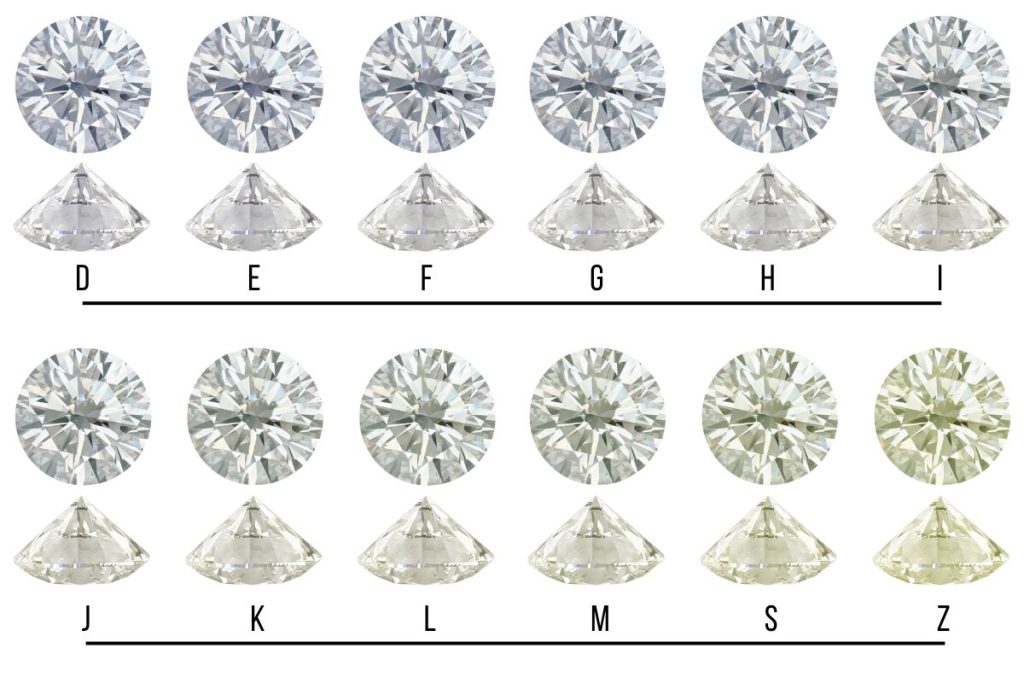
The chart above shows the face-up and face-down color for Diamonds and in most cases the face-up color will be one to two grades higher than the actual color of the stone.
Below, I will break down the main categories of color for you to hopefully give you a better understanding of the color grades:
D – F Color (Colorless)
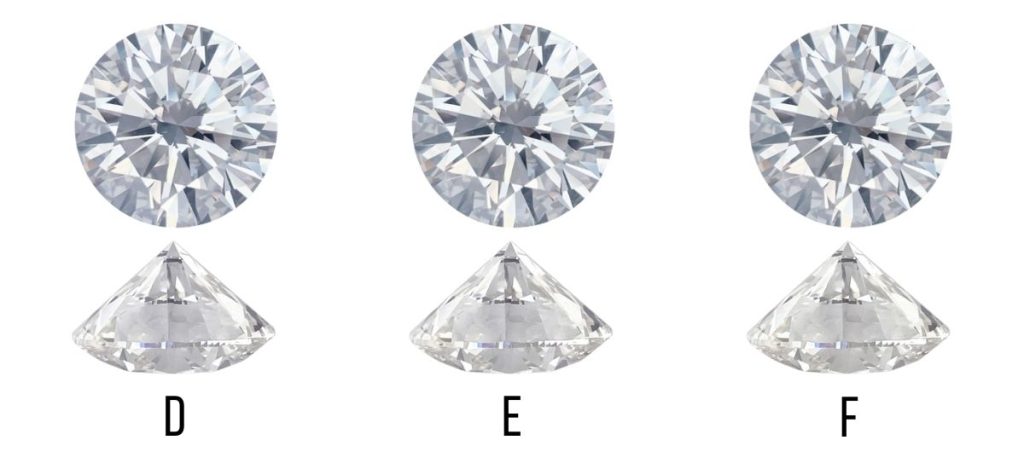
The top three grades for Diamond color are D, E and F and all of these are colorless, meaning that there is no visible color in the Diamond when viewed table up or from the side but if they are all colorless, then what is the difference between them?
Having looked at a fair few D – F color Diamonds, the only way I can describe it is that D color Diamonds look brighter than an E color, which looks brighter than an F color and this is something that is difficult to see in images but is noticeable when you see stones in person.
G – J Color (Near Colorless)
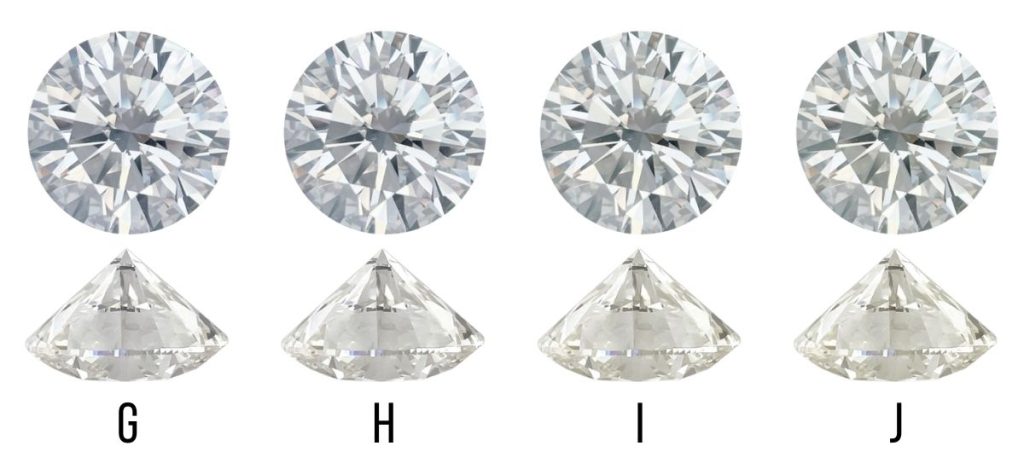
The next 4 grades are classified as near colorless, meaning that there is a very faint tint of color that can be seen in the Diamond.
Now I do have to stress that when I say a very faint tint of color, it is very faint and this is much more apparent if you view stones in this range in person (and in the right lighting conditions) but there is a noticeable difference between a G and J color stone.
K – M (Faint Tint)
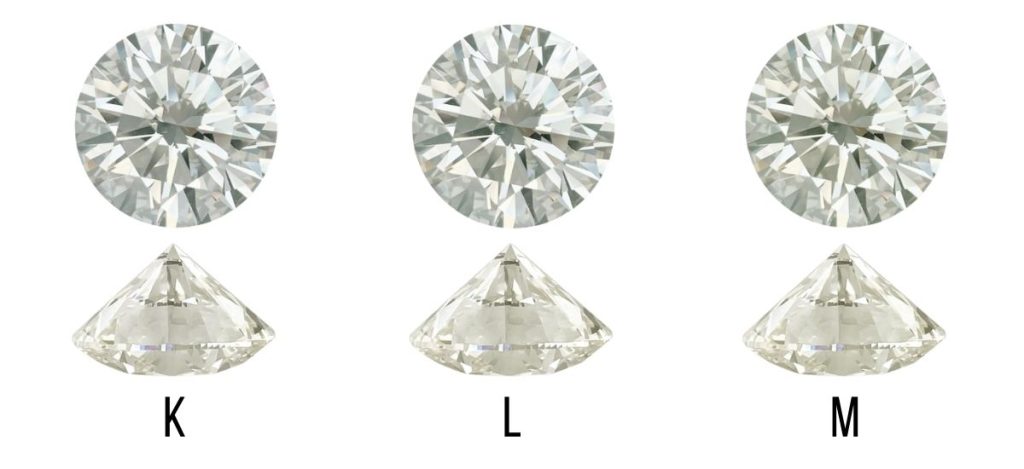
Next we move on to the three grades that are the lower end of what is generally available on the market:
N – R (Very Light Tint) and S – Z (Light Tint)
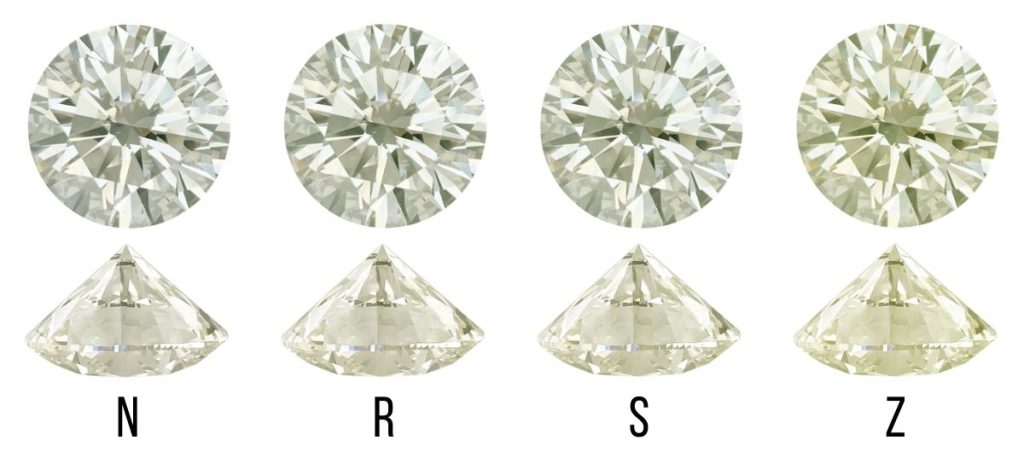
This is kind of the no-mans land of Diamond color as stones have a very noticeable tint but the color isn’t strong enough for them to be a fancy color stone.
Even though the GIA categorise these as Very Light Tint and Faint Tint, in the trade any Diamond with a grade from M to Z is referred to as a tinted.
Diamonds in this color range are quite difficult to come across both in the trade and from retailers due to them only appealing to a small number of customers.
Fancy Color Diamonds
The second category is Fancy Color Diamonds, and even when accounting for all the different colors, which includes Blue, Pink and Yellow make up less than 2% of all Natural Diamonds found.
In fancy color Diamonds, we grade the quality of the color by looking at 3 key factors:

Saturation and Tone are combined and used to describe the Diamond, for example “Light”, “Fancy” or “Fancy Vivid”, which is then combined with the Hue to give the descriptive name for that Colored Diamond, such as “Fancy Yellow” or “Fancy Intense Pink”.


Diamond Color and Pricing
How does color affect a Diamonds price?
Color has a big impact on price and the difference in price between two color grades (where other quality factors such as clarity and cut are the same) but how depends on which category the stone falls in:
Conclusion and Recommendations
I hope this post has helped you understand a bit more about color in Diamonds and I’ve added a quick recap of what I covered:
But if you are looking to buy a Diamond, which color should you go for?
And while color is a really important quality aspect of a Diamond, I wouldn’t prioritise it over clarity or cut quality as these can have a much bigger impact on how good or bad your Diamond looks.
