
Lab Grown vs Natural Diamonds – Which One Is The Ethical Choice?
Ethical considerations have become a very important part of the Diamond buying process, especially with the rise of lab-grown Diamonds that have been marketed as the ‘ethical’ choice.
But is this actually true?
Finding the answer to this started as a fact-finding mission for myself because, as a gemmologist, I get asked about lab-grown and natural Diamonds a lot and decided to turn my research into a post that might be helpful to others.
Also, I don’t sell Diamonds, so I have no incentive to promote one or the other (which can’t be said for a lot of the so-called ‘information’ online).
Key Takeaways
Lab-Grown Diamonds FAQ
I’m going to start by quickly answering some of the commonly asked questions about lab-grown Diamonds before moving on to the more in-depth topics:
Are Lab-Grown Diamonds Real Diamonds?
Yes, lab-grown Diamonds are real Diamonds as they share nearly identical physical, chemical and optical properties as their natural counterparts and when cut and polished, it is nearly impossible to tell them apart just by looking at them.
Are Lab-Grown Diamonds Identical To Natural Diamonds?
Not completely, they do have some properties that are the same, such as:
But they are not completely identical as some people claim (if they were, we wouldn’t be able to tell them apart), there are differences in how the crystals form, the way they interact with certain light sources and the inclusions that can be found in them.
Are Lab-Grown Diamonds Better Quality?
No, just like Natural Diamonds, they come in all different qualities with different colours and clarity.
Lab-Grown vs Synthetic Diamonds?
Lab-grown and synthetic Diamonds are the same thing, the easiest way to think of it is that they are man-made Diamonds.
Technically, synthetic is the correct gemmological term but due to marketing (and some government lobbying in some countries), lab-grown is the more widely used term.
Lab Grown vs Natural Diamond Price & Value
One of the biggest things that is talked about in the Lab-grown vs Natural Diamond conversation is price and it is definitely a significant thing to consider as the gap between the two is considerable.
Over the last few years, the price of lab-grown Diamonds has fallen considerably
And one of the big issues here is that the price gap is growing and here are the figures to prove it on a 1 carat, G colour, VS1 clarity in 2018 vs 2023 vs 2025:
| Lab-Grown | Natural | |
| 2018 | $3,625 | $6,600 |
| 2023 | $1,400 | $7,900 |
| 2025 | $880 | $5,375 |
2018 price source: Paul Zimnisky, 2023 & 2025 price source: Blue Nile average price
And even though the price of Natural Diamonds has dropped considerably in 2025, the difference in price as a percentage value actually grew:
- 2018 – lab-grown were 45% cheaper than naturals
- 2023 – they were approximately 83% cheaper
- 2025 – they are approximately 84% cheaper
I also did some looking around and on loosegrowndiamond.com, I found the same quality lab-grown Diamonds selling for an average of $366, which is approximately 93% less than the average natural stone.
This does mean that you can get a lot more bling for your money with lab-grown Diamonds, just don’t be too disappointed if in a couple of years, you see a larger, high-quality lab-grown Diamond for sale for less than what you paid.
Lab-Grown vs Natural Diamond Resale Value
If I’m talking about price, then I have to talk about resale value but I am just looking at the resale value of Diamonds, not the whole piece (as there are many more variables to consider then).
Natural Diamonds
The resale value of a Natural Diamond can be between 25% and 50% of the original purchase price stone, depending on:
Lab-Grown Diamonds
Lab-Grown Diamonds have little to no resale value because:
If you want to learn more about this, I have written a post about Diamond resale value that covers this in much more detail.
Lab-Grown vs Natural Diamonds: Environmental Impact
One of the biggest areas of discussion is the environmental impact of lab-grown and natural Diamonds but one of the BIG problems is that a lot of the supposed information quoted online by many retailers comes from two very dubious sources, which are:
- The 2014 Frost and Sullivan Report which is commonly quoted by lab-grown Diamond retailers was found by JCK Online to have links to the International Grown Diamond Association (which is why it is no longer available online)
- The 2016 SPG report that is quoted by many Natural Diamond retailers, was paid for by the Diamond Producers Association
This is one of the reasons why you should be very cautious about a lot of the marketing material out there.
They also seem to focus very heavily on the aspects that benefit their side of the argument but there are a couple of things to consider when it comes to environmental impact:
1: Energy Usage
Finding this information was challenging to say the least but I did find one independent study that covers and they found that:
I also did some of my own digging and found that:
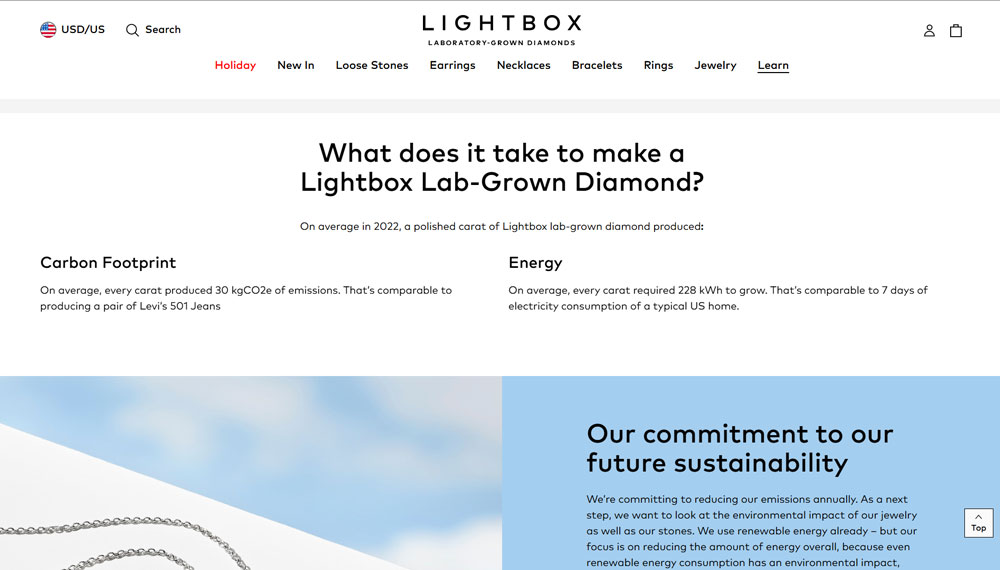
But what do these figures mean?
Without comparison, these figures are useless so to compare. According to the US Energy Information Administration, the average US household uses 28.7kWH of energy per day.
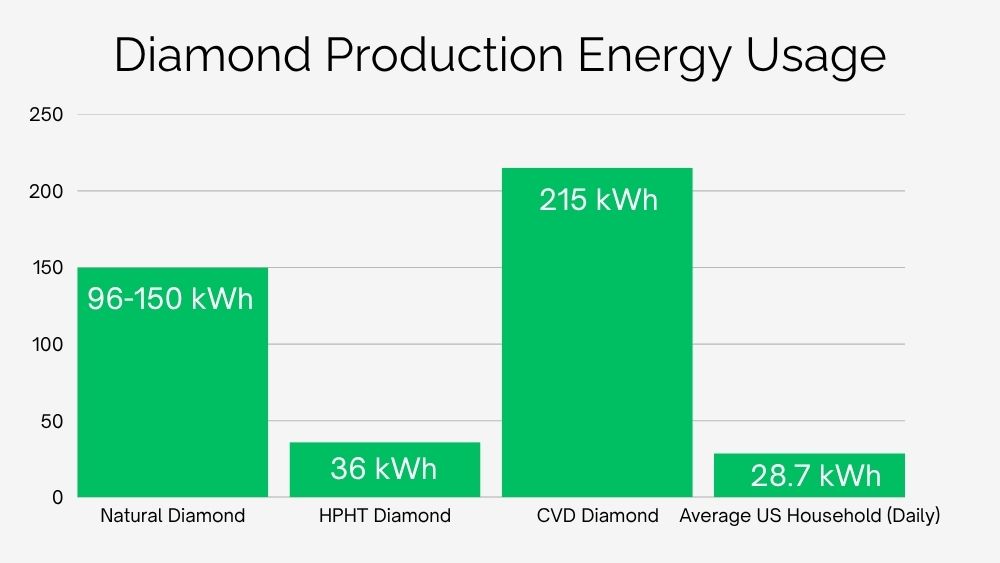
So when it comes to energy usage, lab-grown Diamonds definitely aren’t any better for the environment than Natural but there is more to consider than just energy usage, what about energy sources and greenhouse gases?
This is where things get a bit challenging, as each mine and lab-grown factory are different but there are some more general things to consider:
- The majority of lab-grown gem-quality Diamonds are produced in countries that primarily use fossil fuels as their main source of power (China 52% coal, 18% oil and 9% gas and India 56% coal, 26% oil and 6% gas)
- Mining involves the use of heavy, diesel-powered machinery, which isn’t a clean fuel source
But there are obviously counters to these points, in that:
- Some lab-grown companies do generate some or all of their energy from renewable energy sources
- Many mining companies are investing in using renewable energy sources to help power their mines and reduce their carbon footprint
My takeaway from this was that there are too many variables and not enough information for it to be possible that anyone could come out and say with confidence, one is better than the other.
2: Local Environmental Impact
The local environmental impact is much easier to talk about than the energy consumption as Diamond mining does have a more detrimental impact than lab-grown Diamonds that are manufactured in industrial units.
One point I do just want to cover is that some Lab-grown Diamond companies claim that there is “no mining” involved in their Diamond production process and this simply cannot be true becuase:
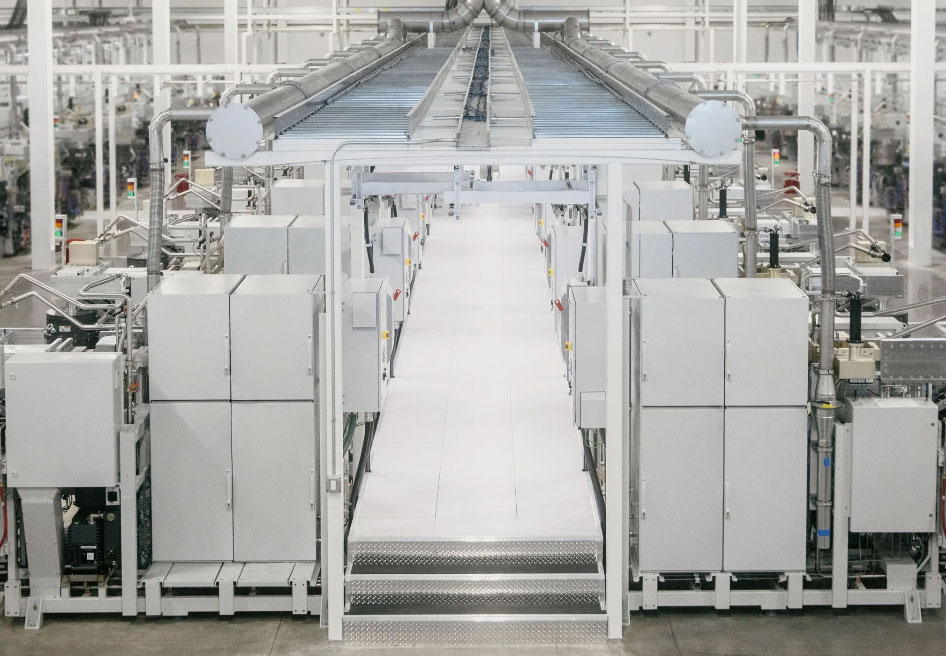
But what are the negative effects of Diamond mining:
- Disruption of land – most Diamond mines require land to be removed in order for the Diamond to be removed from the host rock, this can result in the destruction or upset of local:
- Fauna (plants, trees etc)
- Ecosystems
- Wildlife
- Water Usage – one of the key aspects with Natural Diamonds is that more water is used in the production process and while they don’t need to use additional chemicals with the water, the wastewater can become contaminated with elements that are trapped within the excavated earth
- Heavy Machinery – this does fall under greenhouse gases but heavy diesel machinery does create more pollutants in the local environment
And for many large mining operations, the result of Diamond mining is a very large hole in the ground but how much rock needs to be mined to produce a 1-carat Diamond?

Well, the figure varies but there is a commonly quoted figure of 250 tonnes of ore for every 1 carat of Diamond and I’m not sure where this comes from but in Botswana in 2021, it ranged from 2.2 tonnes per carat to 8.3 tonnes per carat and some Canadian mines are estimated to yield 2.5 carats per ton, which is a lot different to 250 tonnes isn’t it?
This doesn’t look great for Natural Diamonds but mining companies are taking steps to reduce their impact on the environment by:
- Using more renewable energy sources
- Having a reclamation plan in place for all of the mines that they are closing down
- Preserving land to compensate for their mining operations, for example, De Beers says say they manage over 200,000 acres of land in southern Africa for conservation (source: De Beers)
And one thing that I think is quite interesting is that Kimberlite (the material from which Diamond is primarily mined) does have the potential to be used for carbon sequestration, which is the process of capturing and storing atmospheric carbon dioxide.
How Does This Compare To Lab-Grown Diamonds?
Lab-grown Diamonds don’t have much of an impact on the local environment, especially if the company uses a building for their factory that already exists but if a custom building is required, then this may have some impact.
And one of the big things is that neither of the main manufacturing methods requires anywhere near the amount of water that a mined Diamond and this does give a clear advantage to lab-grown Diamonds.
Lab-Grown vs Natural Diamonds: Socio-Economic Impact
The socio-economic impact of Diamond is something that is either not talked about or information is cherry-picked so that it fits in with a company’s marketing goals.
The Social Impact Of Diamonds
When buying a Diamond, you want to know that your purchase hasn’t had a negative impact on someone else’s life and there are two main things that always seemed to get mentioned about Natural Diamonds:
Human Rights Abuses and Child Labour Exploitation
In the history of Diamond mining, there have been lots of issues when it comes to human rights abuses (what mining industry doesn’t?) and the valid concern many buyers have about ‘blood diamonds’ but is that still the case today?
Not really, because there have been a number of changes over the years to combat these, including:
- Mining Standards – most of the major mine owners like Anglo-American (who own De Beers) and Rio Tinto are members of ICMM, and have implemented mining standards across their mine sites to help improve:
- Workers rights
- Health and safety
- Pay and training
- Partnerships – many companies now work in partnership with the governments of diamond-producing countries, such as De Beers partnerships with Botswana and Namibia, that has lead to:
- Improved infrastructure
- Improved healthcare
- Improved education
- The Kimberley Process – a global initiative involving 86 countries alongside the industry to remove conflict Diamonds from the supply chain with over 99% of rough Diamonds coming from process members
The only real issues arise from small artisanal or illegal mines, which are often in countries where corruption is common and in very remote areas, which makes governing them difficult but the chances of you getting one of these stones are very slim, as any legitimate business or person in the industry will not touch these stones.
Are Lab-grown Diamonds Conflict-free?
Yes, as they are produced in countries where any income generated from their production doesn’t fund conflict or wars but does this mean that there are no human-rights issues?
We don’t actually know and while there haven’t been any reported but China and India aren’t exactly world leaders for human or workers’ rights.
The Economic Impact Of Diamonds
The economic impact of Diamonds is an interesting one as the industry was worth an estimated $41.5 Billion in 2024 (which sounds like a lot until you see that the revenue of Amazon in 2022 was $638 Billion!) but one type of Diamond has a far bigger economic impact than the other.
Let’s start with the economic impact of lab-grown Diamonds by looking at the 5 biggest producing countries:
- China – 2nd biggest economy
- India – 5th biggest economy
- USA – the biggest economy
- Singapore – 30th biggest economy (impressive considering it is a small island and city state)
- Russia – 11th biggest economy
In all of these economies, the impact of the lab-grown Diamond industry is very small and the money stays within the large economies as China is the largest producer, India is the diamond-cutting center of the world and the USA is the largest customer base.
Compare this with the largest Natural diamond-producing countries in the world:
- Russia – 11th biggest economy
- Botswana – 123rd biggest economy
- Angola – 72nd biggest economy
- Canada – 10th biggest economy
- Democratic Republic of Congo – 86th biggest economy
In fact, 8 of the top 10 Diamond producing countries are in sub-Saharan Africa and in some of these countries, Diamonds are a significant contributor to GDP, such as Botswana (over 32%) and Namibia (around 10%) and to Africa as a whole, Diamonds generate over $9 Billion a year.
But the rise of lab-grown diamonds has begun to cause some economic issues, these include:
From an economic standpoint, Natural Diamonds have a far wider-reaching impact.
Conclusion – Which One Is More Ethical?
There simply isn’t enough information out there to conclusivly say whether one is more ethical than the other and for seemingly every argument, there is a counter-argument to be made.
If ethics is the driving force behind the decision to go for one or the other, then it comes down to personal choice as to which one best fits with their personal beliefs.
On a final note, the one area that I have found to be unethical is in a lot of the marketing and I know the aim of marketing is to get people to buy but this shouldn’t be done by cherry-picking stats or not providing the full story.
I have seen this a lot on the lab-grown side, with many marketing campaigns basically coming down to Lab-Grown = Good, Natural = Bad! (Before anyone comes at me, I have also seen and been very critical of some of the natural sides marketing as well).

I'm Paul Haywood FGA DGA, the owner and founder of Haywoods Gems, I'm a fully qualified Gemmologist and Diamond Grader from the Gemmological Association of Great Britain.