
Learn About Gemstones – A Beginner’s Guide
Welcome to the awesome world of gemstones!
Whether you’re a new gem collector, a budding gemmologist or simply someone who appreciates the beauty of these precious stones, learning about the different types of gemstones is a fascinating journey.
Before I get into the guide, let me introduce myself, my name is Paul Haywood FGA DGA and I’m a fully qualified gemmologist with the Gemmological Association of Great Britain (Gem-A) and my love and interest in gems was the reason why I decided to study and then teach about them.
So, with that out of the way, let’s begin our journey into the fascinating world of gemstones!
What Is A Gemstone?
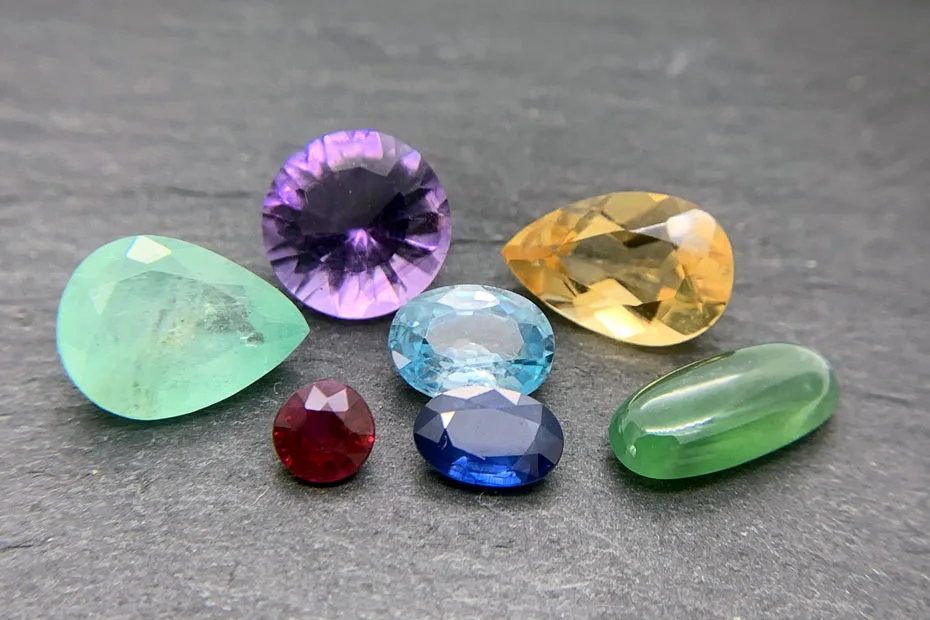
Let’s start with the basics, what is a gemstone?
A broad definition is that a gemstone is a mineral, rock or organic material that is highly prized for beauty, durability, and rarity, many are then cut and polished.
But let’s take a closer look at the three highly prized characteristics in the above definition:
Beauty
Beauty is in the eye of the beholder but colour, transparency, lustre and optical effects are all part of a stones beauty.
Durability
A gemstone’s durability is a combination of its hardness, toughness and stability, all of which impact how the gem is cut and best used.
Rarity
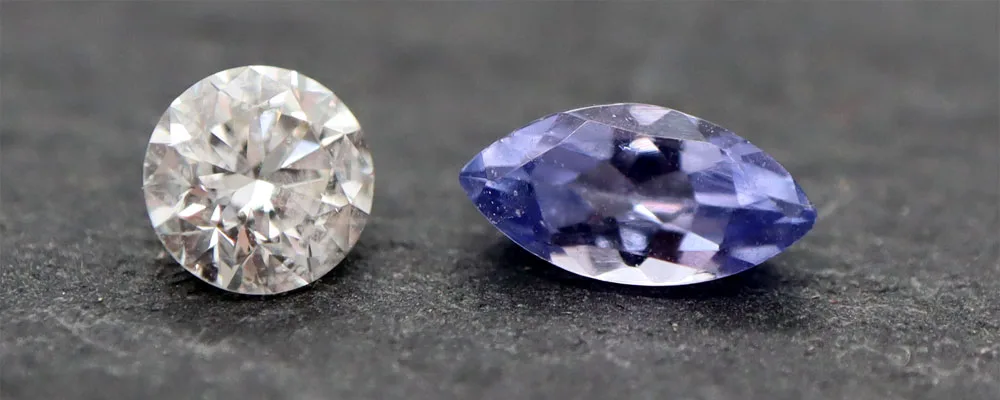
Rarity is relative but gem-quality stones are rarer than most minerals, for example, Diamonds aren’t that rare but only around 20% of the stones mined every year are of gem quality. Another example is Quartz, which is the most abundant mineral on Earth but Amethyst and especially Citrine are far less abundant, which is why they are classed as gemstones.
Gemstone Terminology
Before I get to the gems (they are in the next section), I just want to cover some of the terminology around gemstones, as it can be a bit confusing.
This isn’t going to be a full glossary, just some important ones:
- Species – these are gemstones that have a set chemical structure and composition, examples of species includes Corundum, Diamond and Topaz
- Groups – these are gemstones that have the same chemical structure but a slightly different chemical composition; examples of groups includes Garnet, Feldspar and Tourmaline (there can also be Species within these groups)
- Varieties – this is what we call individual gemstones that are part of a species or group and the correct way to write this is the group/species, then var followed by the name of the variety, for example: Quartz var Amethyst
- Non-Crystalline – these are gemstones that don’t have a defined crystal structure (also known as amorphous) and includes Opal and Obsidian
- Rocks – possibly the most unflattering name but these are gem materials that are natural aggregates of mineral crystals and includes Jade and Lapis Lazuli
- Organics – these are gemstones that are made with the help of plants or animals and include Pearls, Amber and Coral
That is quite a few different categories and one thing you will commonly see is the use of the word Family, which is often used as a catch-all term used to describe gemstones that have different varieties.
Different Types Of Gemstones
Let’s take a look at some of the different types of gemstones that are out there.
This isn’t a complete list as I’ve only included types where I have examples to take pictures of.
Beryl
Hardness
7 1/2 – 8
Toughness
Poor – Good
Stability
Good
RI
1.56 – 1.60
SG
2.65 – 2.80
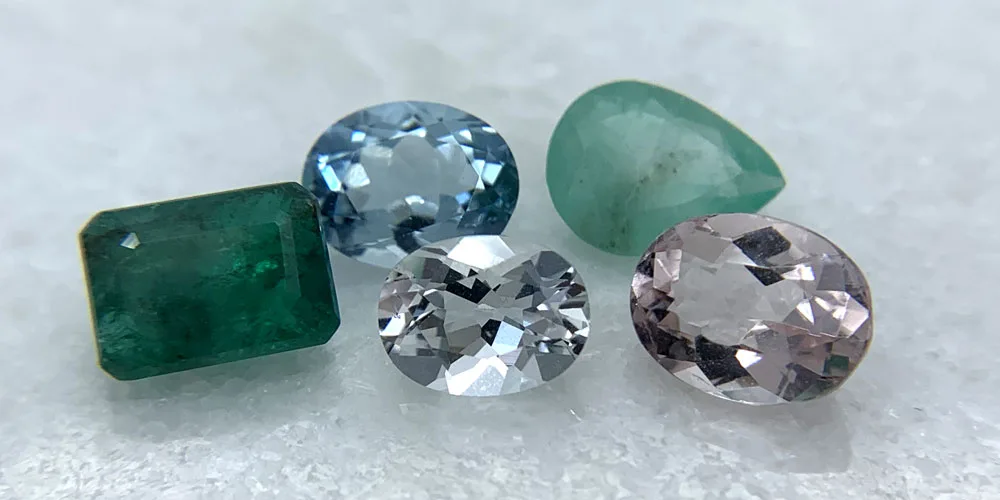
Beryl is one of the most important gemstone species because it has a number of significant varieties, including:
- Emerald – one of the ‘Big 4’ gemstones and the most well-known variety that is both historically and commercially important
- Aquamarine – the second most well-known variety that like Emerald, is both historically and commercially important, although not to the level of Emerald
- Red Beryl (also known as Bixbite) – one of the rarest gemstones that is only found in a couple of locations on Earth
Other varieties include Morganite (pink), Heliodor (yellow) and Goshenite (colourless – this is Beryl in its purest form).
I’ve created a dedicated Emerald Guide that takes a deeper look at the factors that affect their price.
Corundum
Hardness
9
Toughness
Good – Very Good
Stability
Very Good
RI
1.76 – 1.78
SG
3.8 – 4
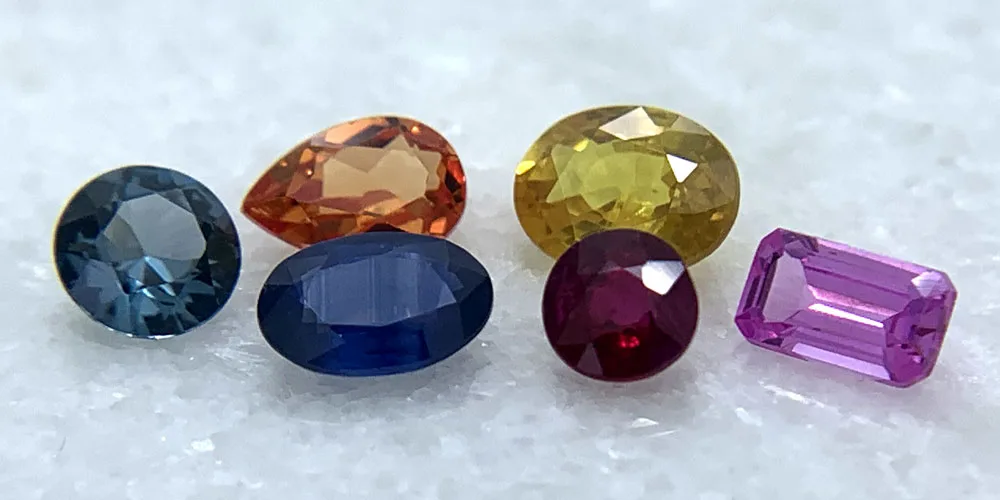
Arguably the most important gemstone species due to the cultural, historical and commercial impact of its two varieties, that are:
- Ruby – the red variety that is one of the most desirable gemstones on Earth and also the most expensive stone that isn’t a Diamond
- Sapphire – while most people think of a blue stone when thinking of Sapphire, it is actually found in all different colours (except red, because that is Ruby), all these non-blue stones are referred to as fancy-colour Sapphires
It is also one of the most durable gemstones, with good hardness, toughness and stability, which, when combined with the wide range of colours, makes it one of the most popular Diamond alternatives.
Want to learn more about Rubies? I have created a dedicated Ruby Guide and Sapphire Guide that looks at the factors that affect the price of these beautiful gemstones.
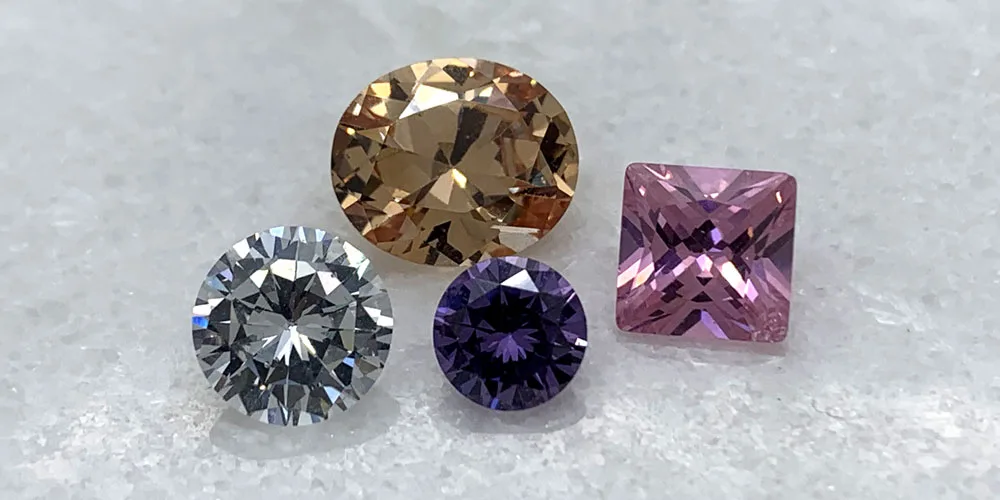
Cubic Zirconia (CZ)
Hardness
8 1/4
Toughness
Good
Stability
Good
RI
2.17
SG
5.6 – 6
Cubic Zirconia (more commonly known as CZ) is a stone that is often dismissed because of its very low price but…
CZs are quite an interesting gemstone in their own right as they are one of the few truly man-made gemstones (there is no natural counterpart) that has been commercially successful.
This is because CZs have really high dispersion combined with good hardness and durability, which is why it has been and continues to be a popular Diamond imitation.
And no, it is not related to Zircon.
Diamond
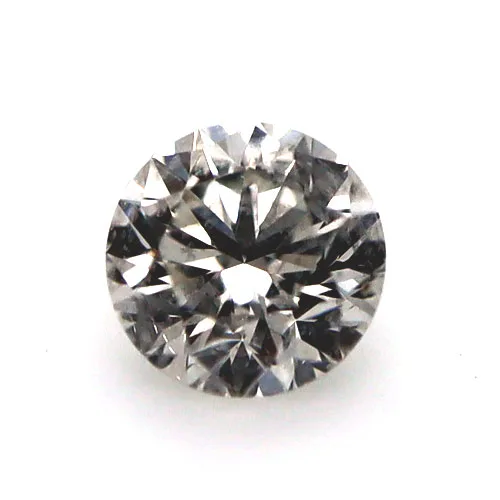
Diamond is the gemstone that needs no introduction.
By far the most important gemstone of the 20th century and thanks to De Beers, Diamonds have now become synonymous with love due to them being the stone of choice for engagement rings since the 1950s.
But gemmologically, it is also an important stone due to its incredible hardness and high levels of dispersion. It is also the only gemstone that is made from a single element, which is, of course, carbon.
If you would like to learn more about Diamonds, then check out my Diamond Guide post.
Hardness
10
Toughness
Good
Stability
Excellent
RI
2.42
SG
3.52
Feldspar
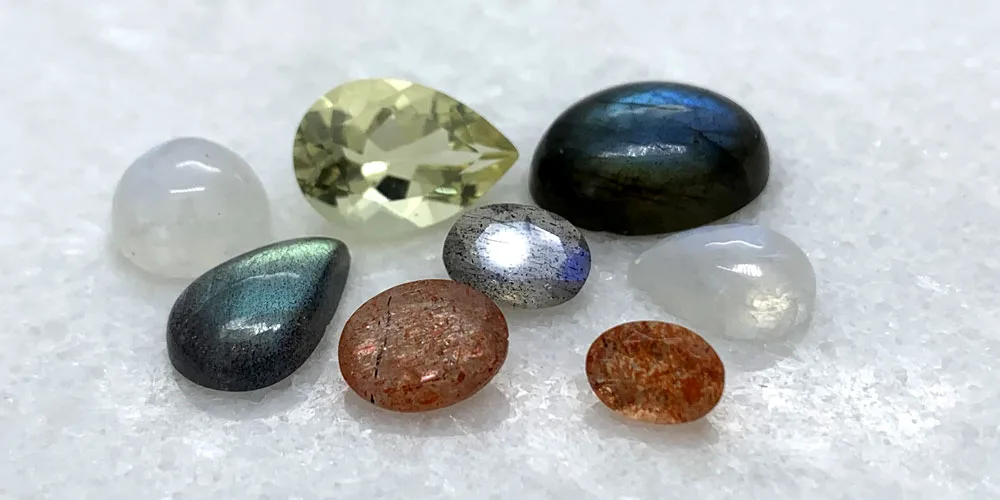
Feldspars are one of the most abundant mineral groups on Earth and there are many different varieties of Feldspar but only 7 are used as gemstones (the other varieties are more important to geologists than gemmologists), these include:
- Labradorite
- Moonstone
- Suntstone
- Orthoclase
From a gemmological perspective, Feldspar is an interesting gemstone as it forms what is known as an isomorphous series, meaning that the varieties share a very similar crystal structure but the chemical composition does vary.
Most Feldspar varieties are pretty inexpensive due to there being a large supply but some of the rarer varieties are more sought after by collectors.
Garnet
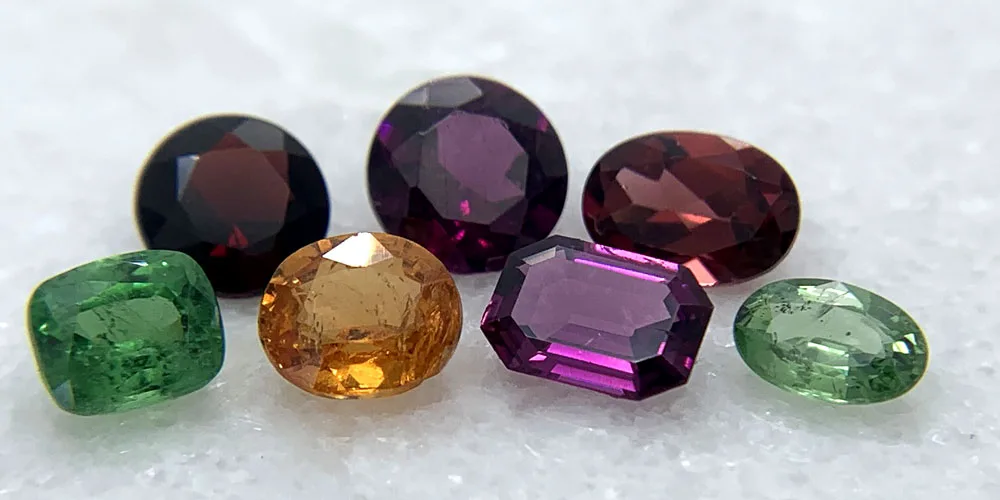
Garnet is one of the most underrated gemstones as most people just think of the brownish-red gemstone that is pretty inexpensive but if you take a deeper look at the Garnet group, they become very interesting.
In total, there are over 20 different species of Garnet but only 5 produce gem-quality stones (there is a sixth one but the crystals are generally too small to cut) and they are:
- Pyrope
- Almandine
- Spessartine
- Grossular
- Andradite
This is because, like Feldspar, Garnets form as an isomorphous series, which means that while garnets share the same crystal structure, the composition does vary between the different species.
Jade

Jade is one of the toughest gemstone materials and one of the few where jewellery is made from the gemstone, such as solid jade bangles. Jade is mainly known for its green colour, with Imperial Jade being the most desirable, jade can also be found in a range of colours including yellow and white.
Hardness
6 1/2 – 7
Toughness
Excellent
Stability
Good
RI
1.66
SG
3.3
Kyanite
Hardness
5-7
Toughness
Fair – Poor
Stability
Good
RI
1.71 – 1.73
SG
3.6 – 3.7
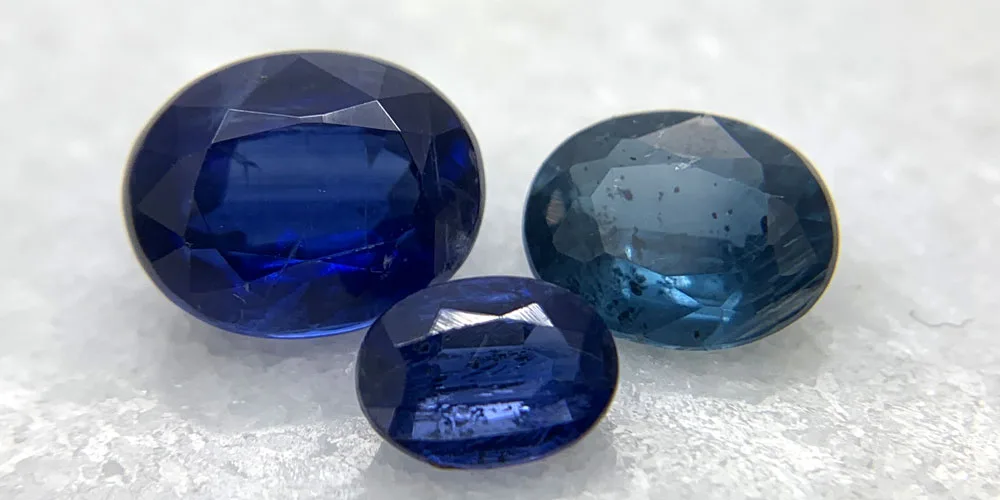
Kyanite is a beautiful blue gemstone that is often confused for Sapphire due to the colour but also some of the inclusions, such as colour-zoning, which looks very similar at first glance to the angluar zoning seen in some natural Sapphires.
Kyantie can be found in a small number of different colours, including:
- Blue (most well-known)
- Green
- Pink
- Yellow
One thing that is unusual about Kyanite is that is has something known as differential hardness, meaning that is one direction it has a hardness of 5 and in another a hardness of 7.
Opal
Hardness
6
Toughness
Poor
Stability
Poor
RI
1.40 – 1.46
SG
2 – 2.2
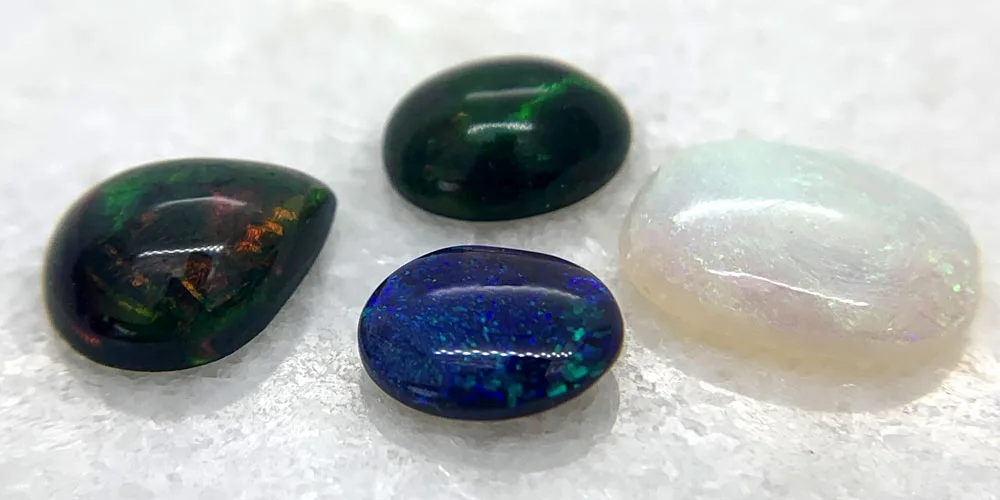
Opal is one of the world’s most beautiful and unique gemstones and due to the way they form, you won’t find a pair of opals that possess the same play of colour.
There are a number of different types of Opal, including:
- Black Opal
- Crystal Opal
- Boulder Opal
- Ethiopian Opal
While they are incredibly beautiful, they are not the most durable gemstones and do need to be treated with care.
Pearl
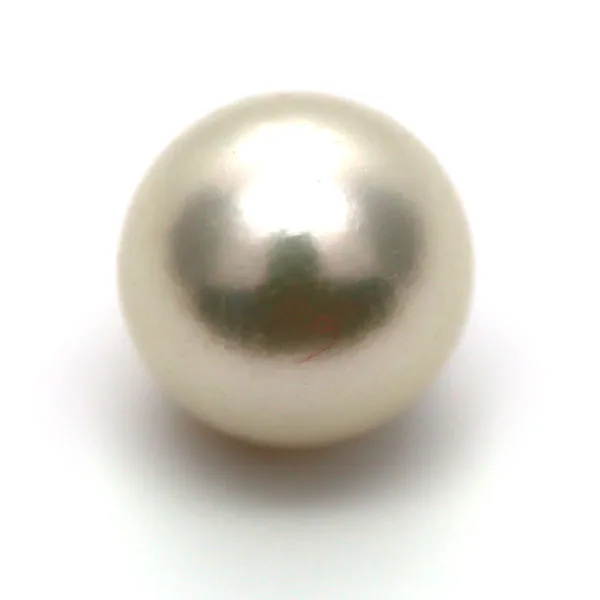
Pearls are the most popular organic gemstone in the world. Historically, natural pearls are one of the rarest and most desirable gems and now are very expensive, the introduction of cultured pearls made them much more accessible and a popular option for jewellery but they aren’t a durable stone and they need to be taken care of.
Hardness
3 1/2 – 4
Toughness
Fair
Stability
Poor
RI
N/A
SG
2.6 – 2.78
Peridot
Hardness
6 1/2
Toughness
Fair
Stability
Fair
RI
1.65 – 1.69
SG
3.32 – 3.37
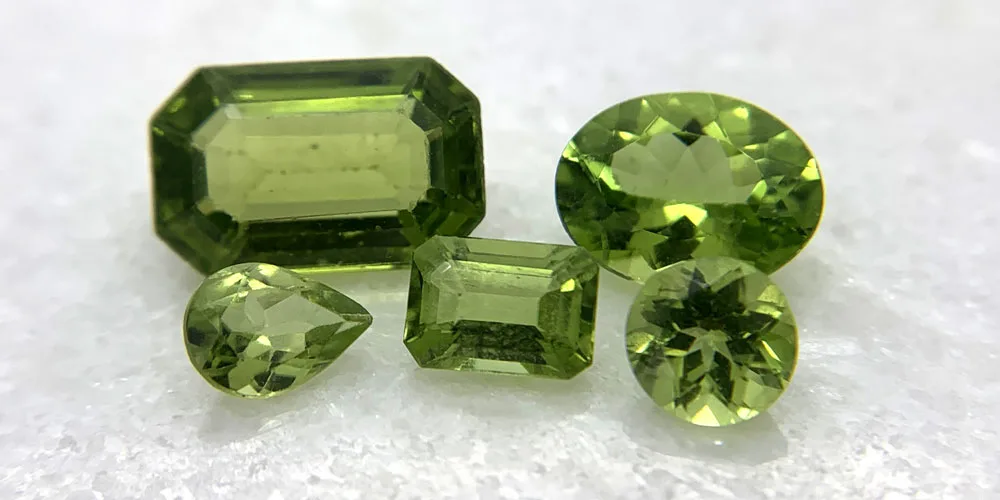
Peridot the name given to gem-quality Olivine and is one of the few gemstones that is only found in one colour, green.
This green can range from pale yellowish green to a bright, vibrant green, which is the most desirable colour.
While it is a very popular gemstone due to its somewhat unique colour (not many other stones look like Peridot), it isn’t the most durable gemstone.
Quartz
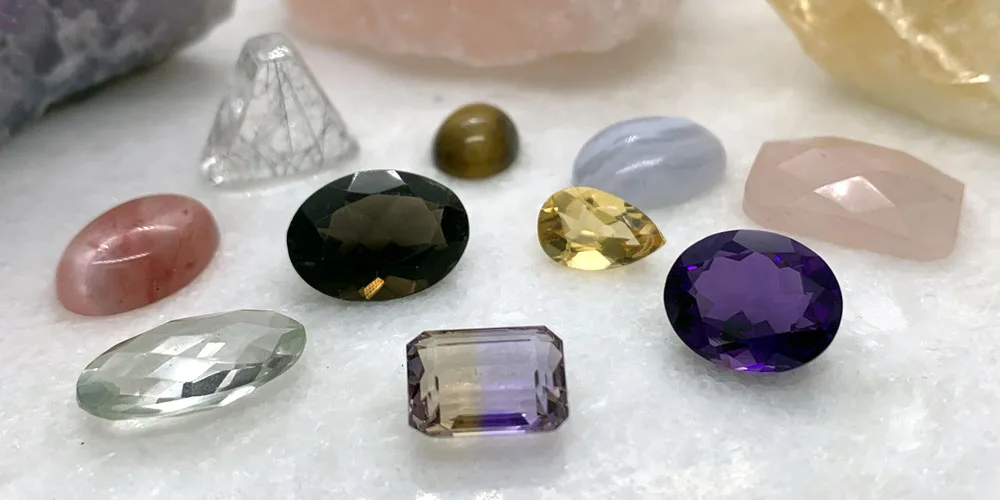
Quartz is one of the most abundant minerals on Earth and there is no other gemstone that has as many varieties (not all Quartz varieties are gemstones).
But they are split into two distinct groups, which are:
Macrocrystalline Quartz
These are Quartz that form as single large crystals and there are a number of varieties, including:
- Rock Crystal (Clear Quartz)
- Amethyst (Purple)
- Citrine (Yellow)
- Smoky Quartz (Brown)
- Rose Quartz (Pink)
Microcrystalline Quartz
These are Quartz that form as aggregates of lots of tiny quartz crystals that do not have a distinct crystal shape, there are many varieties, including:
- Chrysoprase
- Agates
- Onyx
- Tiger’s Eye
- Bloodstone
If you want to learn more, I’ve created a guide that takes a deeper look at the Different Types of Quartz.
Spinel
Hardness
8
Toughness
Very Good
Stability
Very Good
RI
1.71 – 1.74
SG
3.58 – 3.61
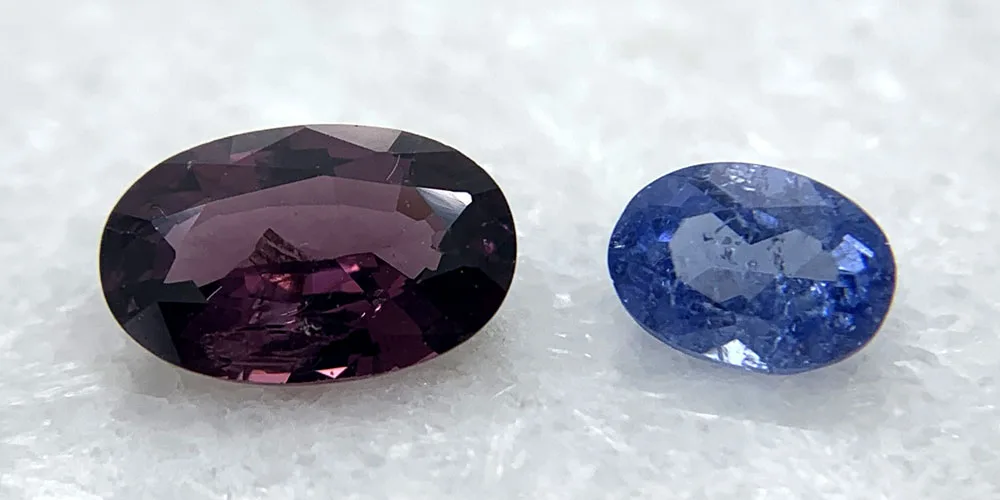
Spinel is a gemstone that is becoming more popular as it gets recognised in its own right.
For many years this stone was overlooked and had the rather unfortunate nickname of ‘the great imposter’ due to its similar appearance to Sapphire and Ruby, with there being many examples of stones that were thought to be a Ruby or Sapphire actually being a Spinel, such as the Black Prince Ruby.
While most well-known for its blue and red varieties, it does come in a range of colours including pink, purple and grey.
Topaz
Hardness
8
Toughness
Fair
Stability
Good
RI
1.61 – 1.64
SG
3.5 – 3.6
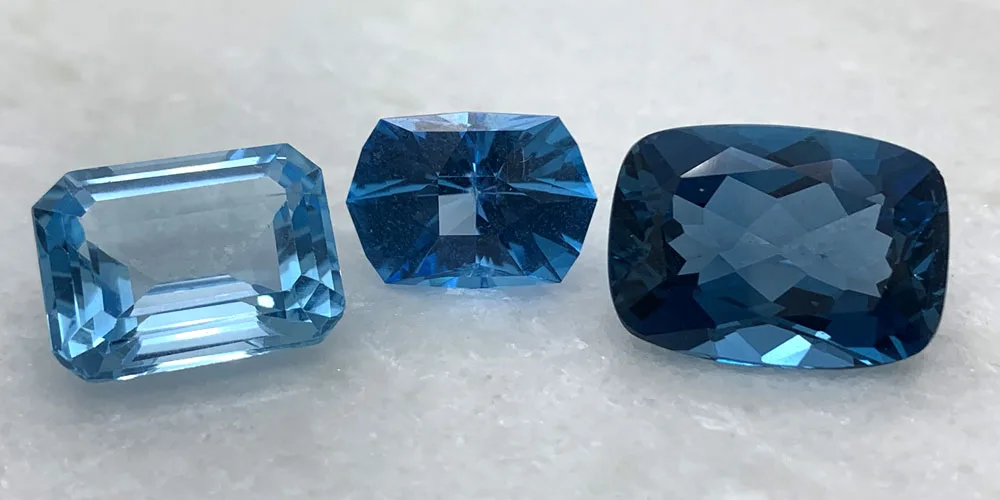
Topaz is mainly known as a relatively inexpensive blue gemstone, with colours ranging from pale to deep blue with trade names to match many of the varying shades.
But Topaz can be found in many colours, including pink and yellow with the pinkish-orange ‘Imperial Topaz’ being both rare and desirable.
While Topaz is a relatively durable gemstone, it does have what is known as perfect cleavage and this means that they can break quite easily if caught just right.
Tourmaline
Hardness
7 – 7 1/2
Toughness
Good
Stability
Very Good
RI
1.62 – 1.65
SG
3 – 3.1
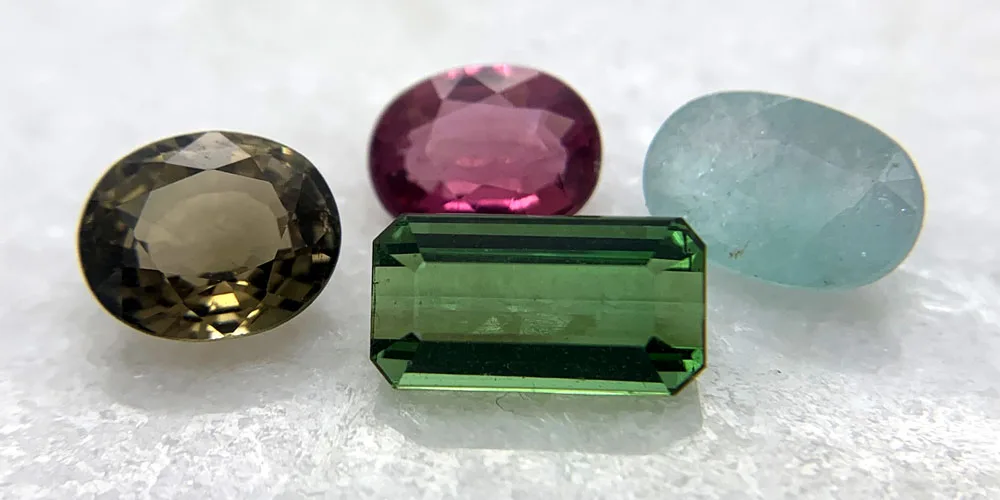
Tourmaline is a very unique gemstone as they can be found in pretty much any colour you can think of due to their chemical composition, there are a number of Tourmaline species but they are better known by their colour-inspired trade names, including:
- Rubellite (Hot Pink to Red)
- Indicolite (Blue)
- Paraiba (Neon Blue to Greenish-Blue)
- Chrome (Vivid Green)
One thing that Tourmalines are known for is bi-colour and tri-colour stones, where a crystal or sometimes cut and polished stone will show two or three colours.
The most well-known bi-colour Tourmaline is the green to pink variety that is called ‘Watermelon Tourmaline’, which isn’t right as a true watermelon Tourmaline is a pink core with a green edge and they usually cut into slices.
Zoisite
Hardness
6 1/2
Toughness
Poor
Stability
Good
RI
1.69 – 1.70
SG
3.15 – 3.38
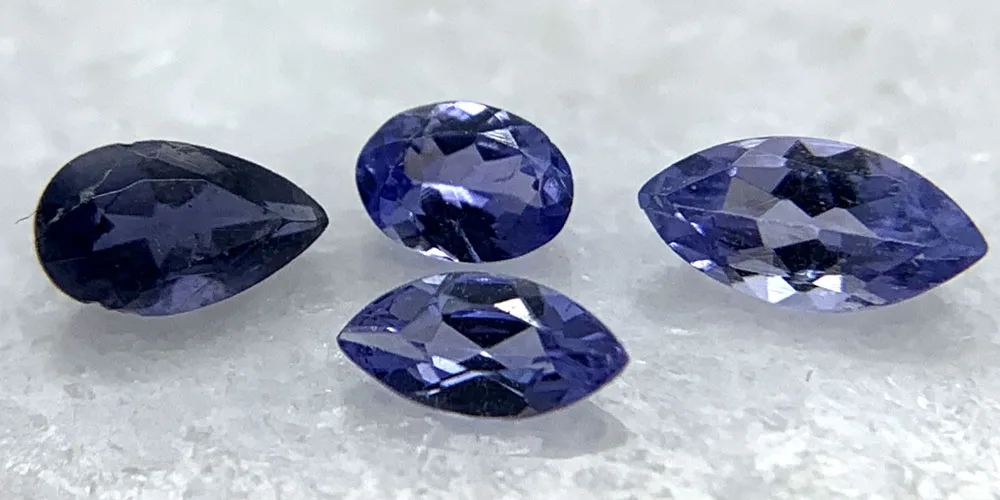
Zoisite is a gemstone species that is most well-known for one gemstone, which is Tanzanite.
Tanzanite is one of the newest gemstones, having only been discovered in 1967 but has gone on to become one of the most popular gemstones due to the stunning colours, which can range from pale blue to rich, vibrant violet-blues and sapphire-type blues.
Recently other varieties, in particular green (often sold as Green Tanzanite) and bi-colour have been gaining in popularity.
Natural, Synthetic or Imitation?
This is something that confuses a lot of people, so I’m going to break it down here:
- Natural Gemstones – these are gemstones that were created by nature, this can be from geological processes or organic growth
- Synthetic Gemstones – these are gemstones that are man-made versions of natural gemstones and they share near identical physical, chemical and optical properties to their natural coutnerparts
- Man-Made Gemstones – these are gemstones that have no natural counterpart, with CZ being the best example
- Imitation (also called Simulants) – these are gemstones that are used to imitate another gemstone and these can be:
- Natural Gemstones – some examples include Blue Spinel as Sapphire or Peridot as Emerald (there are lot of historical examples of this)
- Synthetic Gemstones – some examples include Synthetic Blue Spinel as Sapphire or Synthetic Moissanite as Diamond
- Man-Made Gemstones – such as CZ as Diamond or Blue YAG as Paraiba Tourmaline
One thing I do want to talk about is fake gemstones, this is a term that is used a lot and often incorrectly as the only way a gemstone can be classed as a fake is if it sold as something that it is not.
CZ is great example of this, if it sold as CZ, then it isn’t a fake gemstone but if it is being sold as a Diamond, then it is a fake Diamond.
Hope that makes sense.
Precious vs Semi-Precious Stones
One thing I have to talk about here is Precious and Semi-Precious gemstones, which is one of the stupidest terms we still use when talking about gemstones but is still very commonly used.
The categorisation is:
- Precious Gemstones – Diamond, Emerald, Ruby and Sapphire (often called the Big 4)
- Semi-Precious Gemstones – everything else
Why is it stupid to still use these terms? The first is that it is antiquated and comes from a time when we knew far less about gemstones than we do today.
The second is that it is completely illogical and no one can provide a justification for using them, even though many have tried based on factors such as rarity or value but both of these can easily be discredited:
- There are many gemstones, including colour-change Alexandrite, Black Opal and Paraiba Tourmaline, that are all rarer than the ‘Big 4’
- Prices for the ‘Big 4’ can range from less than $50 a carat to 6 or 7 figures per carat but many of the rarer gemstones will often range from hundreds to thousands a carat
The third is that calling a gemstone semi-precious instantly reduces its value and desirability in the eyes of customers.
The simple fact is that there is no way to define the two and I don’t know about you but a rare gemstone worth thousands of dollars a carat doesn’t exactly sound like semi-precious to me. I’ve delved deeper into this is my Precious vs Semi-Precious Stones post.
Conclusion
I hope this has given you a good introduction into the world of gemstones and this post only just about scratches the surface but this is just an introduction!
When it comes to gemstones and gemmology, it is a never-ending learning journey (in a good way) and I didn’t want to overwhelm you by delving into things like:
- Treatments
- Crystal Systems
- Colouring Elements
That is all things to learn next and if this has got you interested, then I would recommend considering looking at a gemmology course, with hands-on training, as it will open up a whole new world for you.