
Gold is one of the most amazing metals in the world and in this post, I’m going to cover everything you need to know about this precious metal.
I’ve been involved with gold for over a decade and fell in love with it during my first job at a pawnbrokers, followed by selling thousands of pieces of gold jewellery through my own business (when Haywoods Gems was Haywoods Jewellery).
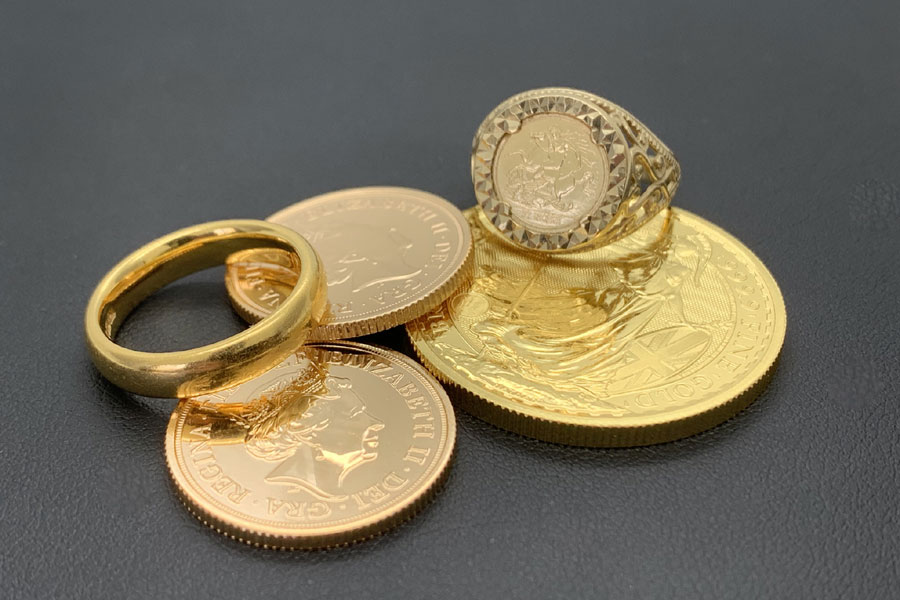
Why is Gold so Valuable?
Gold has been a symbol of wealth for centuries but why? Well, there are a few reasons:
- Nothing else looks like Gold – gold stands out against all other metals due to its unique colour, with many precious metals, such as Silver, Platinum and Palladium all being silver
- It is rare – while it isn’t the rarest metal on earth, Gold is still rarer than metals like Silver or Copper, with an estimated 219,890 tonnes being mined in the whole of human history (for reference, you could fit all the gold ever mined in 4 Olympic-sized swimming pools
- It is a noble metal – one of the most amazing features of gold is that it is unreactive, it doesn’t react with air or water like most other metals, meaning it doesn’t rust, oxidise or tarnish (only Platinum is less reactive)
- It is basically indestructible – because it doesn’t react with anything, it is basically impossible to destroy gold, it can be melted down or dissolved in acid but the gold atoms are still there and can easily be recovered. This is why pretty much all the gold ever mined is still out there is some form or another
- It is an incredible conductor – Gold is one of the best conductors of heat and electricity and as it doesn’t tarnish or rust, it has seen increased usage in industrial applications such as electronics
These unique properties are why gold has been used as a store of wealth for thousands of years, it was used as currency up until the early 20th century. Today, gold prices are driven by a combination of industrial applications, demand for gold jewellery and its status as a ‘safe haven’ during economic uncertainty.
Investment Gold vs Gold Jewellery
What is the difference between investment gold and gold jewellery?
Investment Gold
Stating the obvious but this is bought as an investment, with the hope that it can be sold on for more at a later date.
When it comes to buying investment gold, there are a couple of different options (for this post, I’m just looking at physical gold):
- Gold Coins – these are produced by mints, such as The Royal Mint in the UK. Coin weights can range from 1/40oz to 1kg and are usually 24-carat gold, with the two notable exceptions being the South African Krugerrand and the British Sovereign, both of which are minted in 22-carat gold
- Gold Bars – these are produced by lots of companies, including Pamp and Metalor, many mints also produce gold bars. They are always 24-carat gold and can range in weight from 0.5g to over 20kg
With investment gold, the bigger the bar or coin, the closer price you pay to the spot price (the current market price), for example:
- On a 0.5g bar, you might pay 100% over the spot price
- On a 1kg bar you could be as little as 2-3% above spot
In the UK, there are also some tax advantages with investment gold as Gold Bullion is VAT-free and all coins produced by The Royal Mint are Capital Gains Tax (CGT) free.
Gold Jewellery
There are a couple of significant differences between gold jewellery and investment gold:
- It is alloyed (in most cases) – 24-carat is very soft and to make it durable enough for everyday wear, it is alloyed with other metals. There are some exceptions to this, as some cultures do use pure 24-carat gold in their jewellery
- No tax advantage – from a tax perspective, a piece of gold jewellery is viewed differently to a piece of gold bullion and in the UK, you will pay VAT on your jewellery
- It costs more per gram – this is because you are buying a piece of jewellery and there are additional manufacturing costs to produce a ring or chain than there is to stamp a coin or pour a bar
As I’m talking about gold jewellery, let’s take a deeper look into some of the differences you might experience when looking at gold jewellery.
Karat vs Carat
Carat is the unit of measurement we use to weigh diamonds and gemstones.
Karat is a unit of purity when talking about gold (parts per 1000).
However, in the UK, we use carat for both gold and diamonds/gemstones, the different terms are more widely used in different countries around the world.
You will often also see carat abbreviated to ct, so 18 carat gold will for example, be shortened to 18ct.
Gold Standards and Hallmarks
The UK has some of the strictest laws around gold standards to ensure that people don’t get ripped off when buying jewellery and all gold jewellery weighing more than 1 gram that is sold in the UK has to have a UK Hallmark.
We also have a number of commonly used gold standards in the UK:
| Parts Per Thousand | Percentage | |
|---|---|---|
| 9ct Gold | 375 | 37.5% |
| 14ct Gold | 585 | 58.5% |
| 18ct Gold | 750 | 75% |
| 22ct Gold | 916 | 91.6% |
| 24ct Gold | 999 | 99.9% |
They do vary in popularity:
- 9ct Gold – the most commonly used gold standard in the UK
- 14ct Gold – very uncommon in the UK
- 18ct Gold – very popular option for fine jewellery and engagement rings
- 22ct Gold – a popular option for Indian jewellery, some vintage pieces may be 22ct
I’ve looked at the different gold standards but let’s take a closer look at hallmarks.
A hallmark is a stamp from one of the four UK assay offices (London, Birmingham, Sheffield and Edinburgh), which is made up of different emblems, which include:
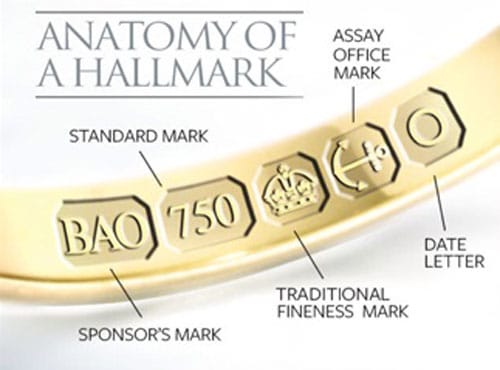
- Sponsors Mark – Who sent the piece for assay, can be an individual or a company.
- Standard Mark – the purity of the metal in parts per 1000.
- Assay Office Mark – This is the symbol of the office that assayed the piece (London – Leopards Head, Birmingham – Anchor, Sheffield – Rose, Edinburgh – Castle).
- Date Letter – The letter and font type of the letter denote the date that the piece was stamped (since 1998, the date letter has been optional).
- Traditional Fineness Mark (Optional) – The different symbols used for the traditional mark denote the type of metal that was being hallmarked with the Crown symbol being used for gold pieces.
Different Gold Colours
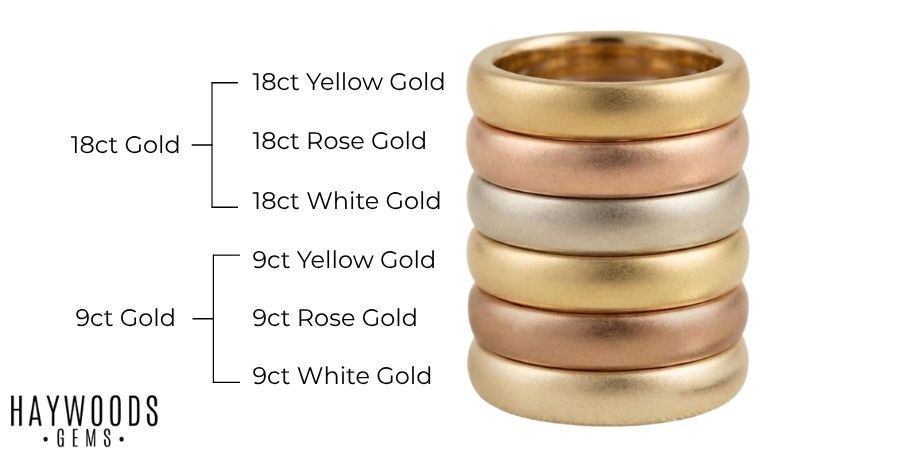
You may have seen yellow gold, white gold and rose gold advertised but are not sure what the difference is between the three.
Yellow Gold
Yellow gold really is just gold and it is the colour we think of when we think of gold.
But as I said above, 24-carat gold is too soft for use in jewellery, so they need to mix with an alloy of other metals to produce a metal that is useable in jewellery but also is instantly recognised as gold.
Two of the main metals used in this alloy are:
- Copper
- Silver
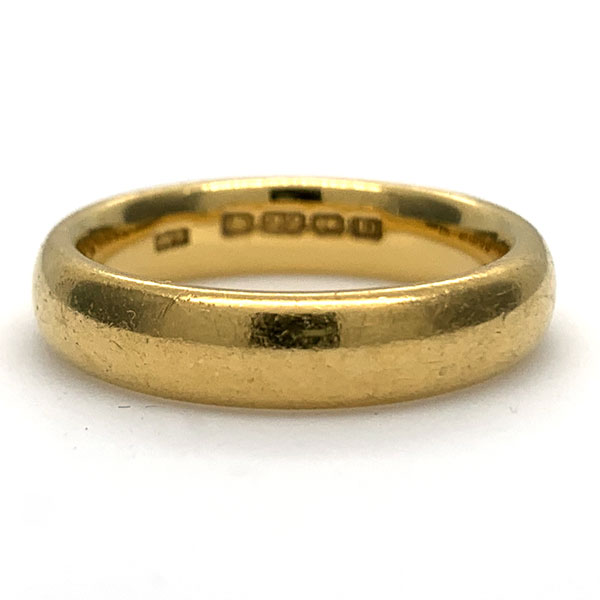
When combined, they produce a colour that is similar to that of pure gold but the exact formulas and metals not only vary between different carats but also different manufacturers and is often a heavily guarded secret.
This is why two yellow gold pieces can vary in colour as one manufacturer may use more silver, which results in a brighter yellow colour, whereas others use more copper, which gives a darker yellow colour that sometimes has a slight reddish tint.
White Gold
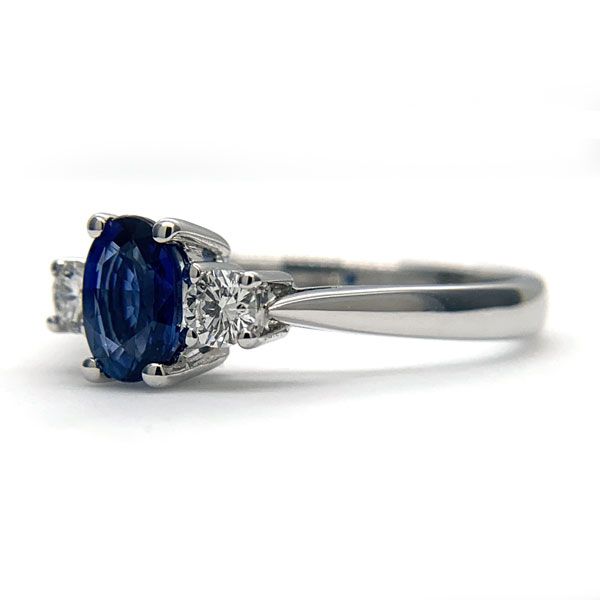
White Gold has become a very popular choice over the past few years, originally it was developed as a cheaper alternative to Platinum but with current prices, Platinum is cheaper and is naturally silver in colour.
To produce White Gold, gold is mixed with silver metals:
- 9ct White Gold is mostly mixed with silver, often results in a pale yellow colour
- 18ct White Gold is often a mix of silver and palladium. A higher palladium content (13%+) gives it a colour similar to that of platinum
The big problem with White Gold is that no matter the alloy used, it doesn’t have that bright, highly reflective finish that most people think of.
This is why most white gold jewellery is rhodium-plated, which gives it that desired finish but it does wear off over time, especially on rings, meaning it does need to be re-plated.
Many people like the colour of the high palladium content white gold and choose not to have it rhodium-plated.
Rose Gold
Rose gold, sometimes called red gold, is a colour of gold that often goes in and out of fashion but is currently a very popular option.
Rose gold is probably the simplest of all the golds to manufacture as it is basically a mixture of gold and copper and this produces a very attractive colour with a reddish tint.
Due to the higher copper content, 9ct rose gold has a much stronger red colour than 18ct rose gold and in some cases, the 18ct variety has more of a pinkish colour.
Conclusion
So there it is, my guide to the wonderful metal that is Gold!
I hope that you have learnt something from this guide as I definitely enjoyed writing it and it took me back to where my jewellery journey began all the way back in 2011.
To this day, I still think that there is something magical about this unique precious metal. Thank you for reading!

I'm Paul Haywood FGA DGA, the owner and founder of Haywoods Gems, I'm a fully qualified Gemmologist and Diamond Grader from the Gemmological Association of Great Britain.