
Oval Cut Diamond Guide (Everything you need to know!)
Oval Diamonds are one of the most popular styles of Diamond cut but there are some things that are unique to Ovals that you need to know about in order to find the perfect stone, which is what I am going to cover in this post.
But what do I know about Oval Diamonds? I’m Paul Haywood FGA DGA and I’m a fully qualified gemmologist with over a decade’s worth of experience in the industry, 7 years of which were running my own online retailer.
I’m not going to cover general things about Diamonds as I’ve already done that in my Beginner’s Guide to Diamonds (I’d recommend taking a look if you are new to Diamonds), I will just be looking at things specifically relating to Oval Cut Diamonds.
Oval Cut Diamond Colour
When it comes to colour in Oval Diamonds, there are some things to consider:


Oval Cut Diamond Ideal Proportions
The GIA doesn’t currently give Oval Diamonds a cut grade but IGI does and this provides us with some useful information as they have provided proportions for stones that qualify for their Excellent cut grade, as you can see in the table below:
| IGI Excellent | |
|---|---|
| Length to Width Ratio | 1.35 – 1.50 |
| Depth % | 58 – 63 |
| Table % | 56 – 62 |
| Crown Angle | 32° – 38° |
| Pavilion Angle | 39.5° – 42.5° |
| Girdle Thickness | Thin – Slightly Thick |
| Culet Size | None – Small |
It is important to know that proportions alone aren’t enough for a stone to be given an Excellent Cut grade, they are also assessed on:
If a stone falls outside of these proportions, then the maximum cut grade it can be given is Very Good.
It is also worth noting that GIA reports do not provide information on Crown or Pavilion angles (which is annoying!) but let’s take a look at some of these proportions in more detail:
Oval Cut Diamond Length-to-Width Ratio
Length-to-width ratio is a funny one as some people put a lot of importance on getting a stone with an ‘ideal’ ratio but the reality is that choosing the perfect ratio comes down to personal preference.
And contrary to a lot of information, it doesn’t have a huge impact on things like the bow tie effect, as there are stones that fall within the Excellent or ‘Ideal’ range that have really obvious bow ties (as you will be able to see in the pictures below) and ones with what some might class as poor ratios that have minimal bow ties.
So what is the difference between the different length-to-width ratios?
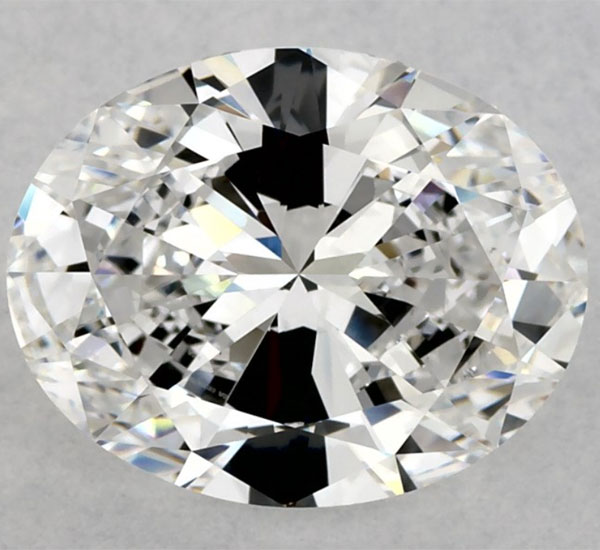


One thing you may find when looking for Oval Diamonds is that the majority will have a ratio of between 1.35 and 1.50, so if your preference is for a lower or higher ratio, you may need to look around.
Oval Cut Diamond Depth Percentage
If you aren’t sure what depth percentage is, it is the total depth of the stone (the crown height, pavilion depth and gridle thickness) as a percentage of the width of the Diamond, for example:
A lot of people try and make out that depth percentage is an important proportion, probably because it is one of the few proportions that GIA includes on their Oval Diamond reports but the reality is that, as a standalone figure, it is kind of useless.
This is because there is no way to try and guess what the crown or pavilion proportions are like just from the depth percentage and girdle thickness and unless the figure is less than 53% or greater than 71%, which indicates a very shallow or deep stone, I really don’t put too much importance on depth percentage.
Oval Cut Diamond Table Size
The table size is the size of the table as a percentage of the width of the Diamond and it does have an impact on how much fire (the rainbow colours seen in a Diamond) and brilliance (the amount of light returned to the eye) is seen in a Diamond.


Girdle Thickness
Girdle thickness is also something you want to pay attention to as:
That is why it is best to go for a Diamond with a Thin, Medium or Slightly Thick girdle as it provides enough durability without paying for additional weight.
You will see two measurements, for example, Thin to Slightly Thick when looking at a Diamond report and this is because the girdle isn’t the same size all the way around the stone so they provide the smallest and largest measurements.
Bow Tie Effect In Oval Cut Diamonds
One of the biggest issues with Oval Diamonds is what is known as the bow tie effect, which is a dark area across the centre of the stone that resembles a bow tie.
But what causes the bow tie effect in Oval Cut Diamonds?
It is actually a really simple answer… Reflections. The dark spot you see in the stone is the reflection of your head and shoulders if you are looking at the stone in person or the camera if you are looking at a picture/video.

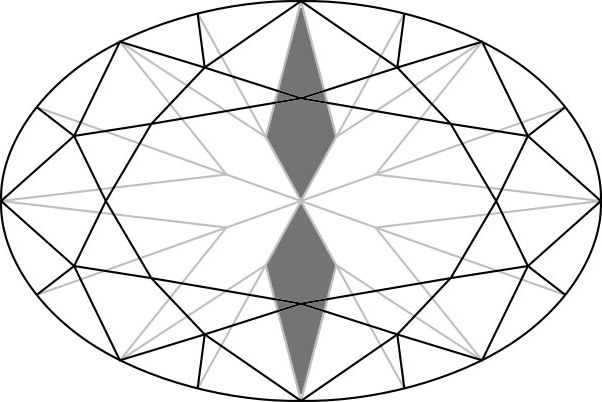
How can you avoid getting a Diamond with a bow tie?
You can’t completely as all Oval Cut Diamonds will have some degree of bow tie, it is just more obvious in some stones than others (as you can see in the pictures above) and it all comes down to how well the Diamond has been cut.
And the only way to find a stone with a minimal bow tie is to look at the stone, no matter what people may say going for a stone with ideal proportions is not going to guarantee that the stone doesn’t have a bow tie and I’ve included images in this post that prove it:
Symmetry
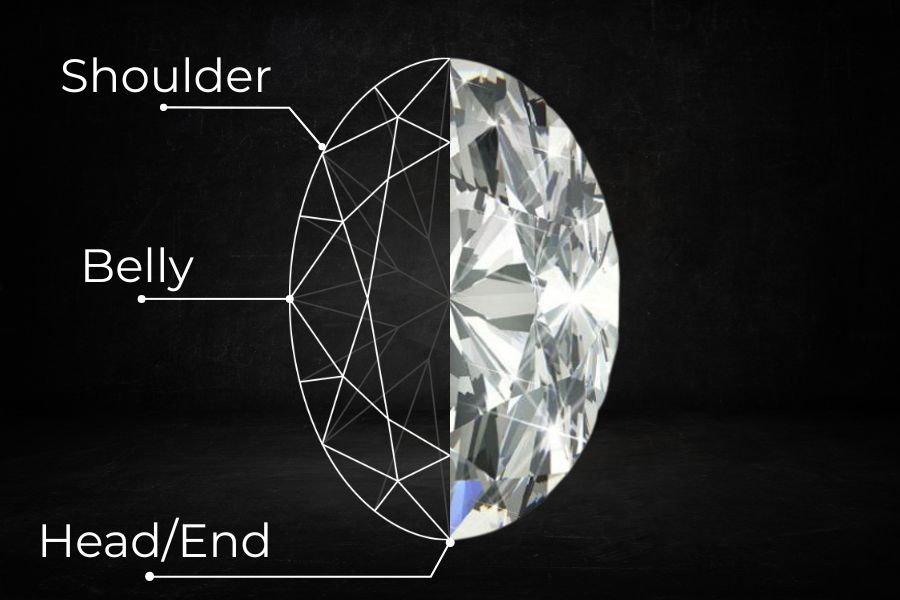
Symmetry is important when it comes to Oval Diamonds as a stone with good symmetry is going to look a lot better than one with poor symmetry.
It is also one of the easier ones to think about as similar to the image above, imagine running a line down the centre of the stone and checking if the left looks the same as the right and the important things for symmetry are:
Fortunately, you don’t have to figure this out for yourself as labs like the GIA grade this for you on a scale from Excellent to Poor and it is best to go for a stone with an Excellent or Very Good symmetry grade.
Oval Cut Carat
The weight of the Diamond you buy is going to depend on your budget and generally, the more the stone weighs, the more expensive it will be but one thing to be aware of is that the weight of a Diamond doesn’t directly correlate to size.
And even though there are charts out there, such as my Oval Cut Size to Weight chart, these should only be used as guides as the proportions vary from stone to stone, meaning two stones can have the same length and width but slightly different weights.

0.5 Carat = 6.5 x 4.4mm
0.75 Carats = 7.2 x 5.1mm
1 Carat = 7.8 x 5.7mm
2 Carat = 9.4 x 7.4mm
3 Carat = 10.6 x 8.5mm
The images above aren’t to scale as this is very difficult to do with different sizes screens and resolutions!
Due to their elongated shape, a well cut 1 carat Oval Cut will look bigger than a 1 carat Round Brilliant and this means that they are definitely worth considering for people who want more presence from their Diamond.
And the elongated shape means that they can be great option for people with longer fingers.
Oval Cut Diamond Price
Prices for Oval Cuts are usually slightly lower per carat than the equivalent Round Brilliant Cut, this is very much due to this style of cut being consistently very popular as Ovals rarely go out of fashion as it is very much a timeless style.
If you want to see the latest Oval Cut prices, then check out our Diamond Price guide, which I update every month.
Conclusion & Recommendations
Hopefully you now have a better idea as to what to look for in Oval Cut Diamonds but what if you just want some recommendations?
I’m going to base this on someone looking for a colourless Oval Cut Diamond:
You then just need to decide whether you want a Natural or Lab-grown Diamond.

I'm Paul Haywood FGA DGA, the owner and founder of Haywoods Gems, I'm a fully qualified Gemmologist and Diamond Grader from the Gemmological Association of Great Britain.