
How Much Does An Oval Cut Diamond Cost In 2026? (UK Prices)
Prices of Oval Cut Diamonds can range from a couple of hundred pounds to over £100,000 and in this guide, I’m going to cover all of the different factors that affect how much Oval Diamonds cost.
Quick Summary
- A 1ct Oval Cut Diamond can cost between £878 and £8,913
- The 4 C’s (Colour, Clarity, Cut and Carat) and Fluorescence all play a factor in how much a Diamond costs
Let’s take a deeper look into the different factors that affect the price of Oval Cut Diamonds and for this post, I’m just going to be looking a colourless stones.
Prices updated: 12th October 2026
Carat
As with all Diamonds, Oval Cuts are priced on a per carat basis and generally, the more a stone weighs (carat is the weight of the stone, not the size), the more it costs per carat than an equivalent quality stone that weighs less and you can see this in the table below:
The stones listed below are: G Colour, VS Clarity.
| Diamond Weight | Price Per Carat | Price Per Stone | View Diamonds |
|---|---|---|---|
| 0.5 Carat | £1,058 – £1,892 | £529 – £946 | View 0.5 Carat Diamonds |
| 1 Carat | £2,414 – £4,823 | £2,414 – £4,823 | View 1 Carat Diamonds |
| 2 Carat | £6,446 – £10,847 | £12,983 – £21,695 | View 2 Carat Diamonds |
| 3 Carat | £10,672 – £15,528 | £32,017 – £46,585 | View 3 Carat Diamonds |
In comparison, Oval Cuts cost on average 20-25% less per carat than the equivalent quality Round Brilliants.
Another thing to note is that the price per carat can jump (sometimes significantly) with stones that weight more than benchmark weights, such as 1 or 2 carats.
For example, with these two stones:
- 0.95 Carat G/VS2 (7.48mm x 5.41mm) – £2,062 per carat
- 1.01 Carat G/VS2 (7.71mm x 5.51mm) – £2,223 per carat
These two stones would look very similar when placed next to each other but the 1ct stone one is nearly £200 more per carat but why?
Desirability, as most people prefer to say they have a 1ct Diamond than explaining it weighs 0.95ct.
As you move past the 3ct mark, the number of available Diamonds does start to drop, this is because larger stones are rarer.
TCW: You may see this advertised on some finished jewellery, this is the Total Carat Weight of the Diamonds on the piece, not the weight of the main stone.
Colour
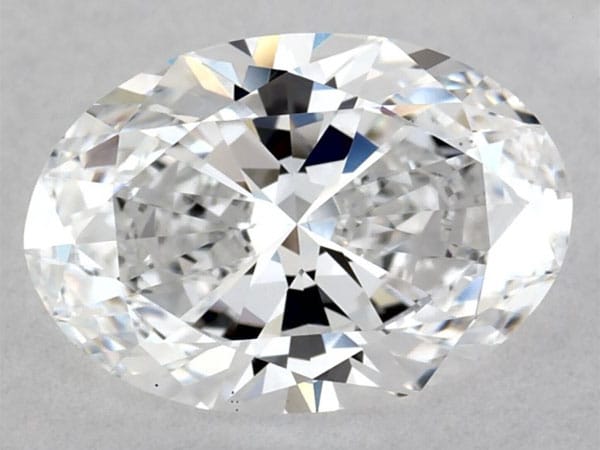
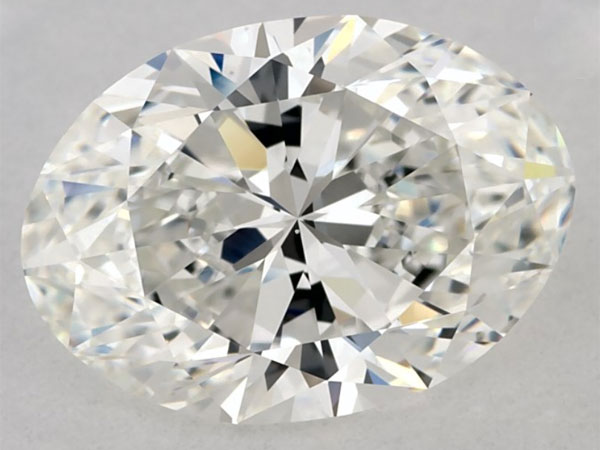
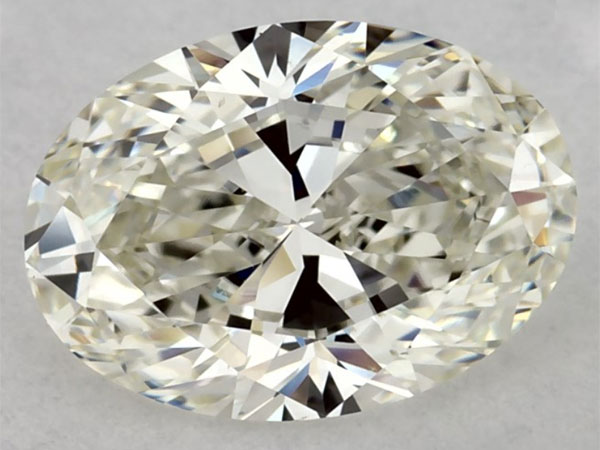
As one of the 4 C’s, Colour also has an impact on the price of a Oval Cut Diamond and the better the colour, the more expensive the stone (assuming all other quality factors are equal).
But how much does colour impact on price? In the table below, I’ve shown the prices for 1 Carat, VS1 Clarity stones with different colour grades:
| Colour | Price Per Carat | View Diamonds |
|---|---|---|
| D | £3,225 – £5,714 | View D Colour Diamonds |
| G | £2,861 – £4,823 | View G Colour Diamonds |
| J | £1,426 – £3,233 | View J Colour Diamonds |
As you can see, the better the colour, the higher the price per carat but is it worth paying a premium for a D, E or F colour Diamond?
Potentially, especially if you want a completely colourless stone as Oval Cuts aren’t quite as Round Brilliants for masking colour and there are some things to consider, including:
- In larger stones (generally ones weighing more than 2 carats), colour can be more noticeable and you may be able to start noticing this from a H colour onwards, so if you want a colourless stone, then go for a D-G grade
- Due to the elongated style, colour may be more concentrated towards the tips of the stone
- The colour of the metal you are putting the stone into can affect how the colour looks, for example, a stone with a slight tint will look more obvious in a Platinum or White Gold setting
But it all comes down to personal preference as some people prefer the warmer look you get with stone that have a lower colour grade.
Clarity
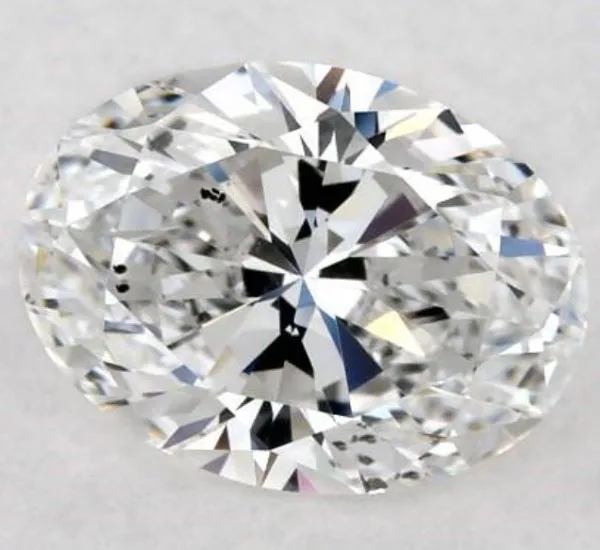
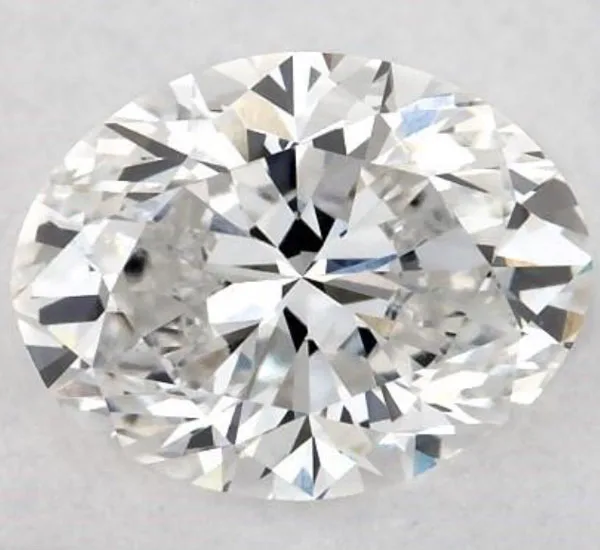
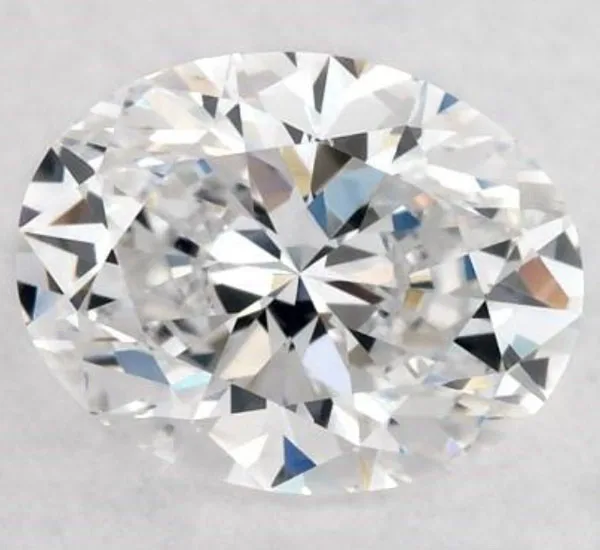
Clarity also has an impact on the price of an Oval Cut Diamond, with stones that have a higher clarity grade cost more, as you can see in the table below:
Prices are based on a 1 Carat, G Colour stone.
| Clarity | Price Per Carat | View Diamonds |
|---|---|---|
| SI1 | £1,832 – £3,926 | View SI1 Clarity Diamonds |
| VS1 | £2,861 – £4,823 | View VS1 Clarity Diamonds |
| VVS1 | £2,878 – £5,711 | View VVS1 Clarity Diamonds |
One thing that you will notice when looking at Diamonds is that stones with the same Clarity and quality can sometimes have a noteable price differences but why?
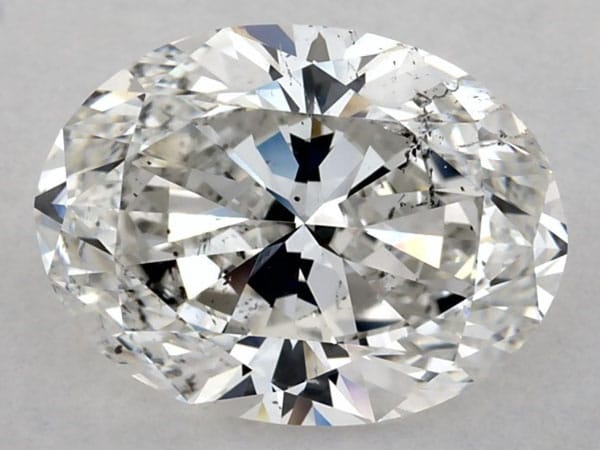
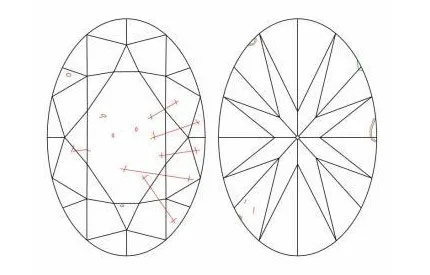
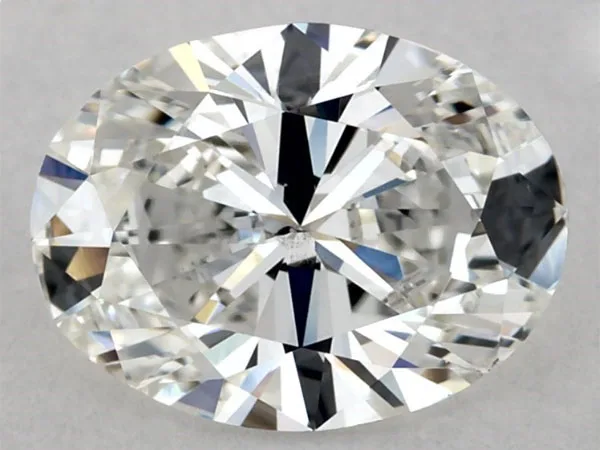
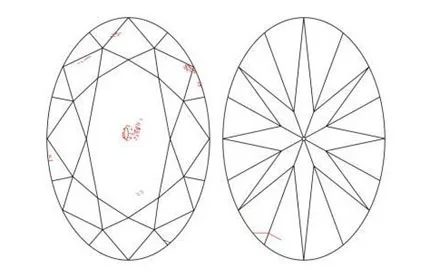
It simply comes down to how noticeable the inclusions are, in the picture above are two G Colour, SI1 Clarity Diamonds but they look noticeably different:
- In the first stone, the inclusions are quite noticeable, especially in the top right-hand side of the stone and it is made worse by some of the inclusions being reflected in other facets, which makes it look more included than it actually is
- In the second stone, the inclusions aren’t that noticeable, even though the plotting diagram* shows that the stone has a reasonably sized inclusion right in the center of the table
*Plotting Diagrams are included on Diamond Reports and show the type of inclusions and where they are located in the stone
This is why looking at the stone and not just the report is really important as the report doesn’t show you how much of a visual impact inclusions have and I’m sure most people would choose the second stone because it looks at lot nicer than the first.
But should you go for the highest clarity grade possible?
In most cases, no. This is because when you move past VS1 Clarity, it becomes very difficult to see the inclusions, especially with the naked eye and it takes a trained Diamond grader to spot the difference between a VS1, VVS2 and Flawless Diamonds.
When looking to buy, a VS1, VS2 or SI1 will in most cases be your best option and I would avoid any I clarity diamonds, even if the prices are very attractive.
Always look at the Diamonds before deciding to buy and don’t just buy from the information on the report as the clarity grade alone doesn’t tell you what the Diamond will look like.
Cut
You may have noticed that in all of the pricing tables above I haven’t included a cut grade as part of my example criteria and there is a good reason for this…
Currently, the GIA does not give a cut grade for Oval Cut Diamonds and even though many sites will list a Cut Grade, if you check the GIA report for any of the stones, you will see that it doesn’t have one.
The only grading lab that currently gives Oval Diamonds a cut grade is IGI and I’ve listed the criteria for their Excellent grade in the table below:
| IGI Excellent | |
|---|---|
| Length to Width Ratio | 1.35 – 1.50 |
| Depth % | 58 – 63 |
| Table % | 56 – 62 |
| Crown Angle | 32° – 38° |
| Pavilion Angle | 39.5° – 42.5° |
| Girdle Thickness | Thin – Slightly Thick |
| Culet Size | None – Small |
The GIA does grade Oval Diamonds on their Symmetry and Polish, with each being graded as either Poor, Fair, Good, Very Good or Excellent.
Most retailers don’t stock Poor or Fair graded stones but when it comes to price, the grades do overlap quite a bit, as can be seen in the table below (based on 1ct G/VS stones):
| Good | Excellent | |
|---|---|---|
| Polish | £4,582 – £4,582 | £2,414 – £4,823 |
| Symmetry | £2,777 – £5,045 | £2,223 – £4,823 |
When it comes to Cut in Oval Diamonds, there are a couple of things to consider:
Length-to-Width Ratio
Length-to-width ratio is a funny one as some people put a lot of importance on getting a stone with an ‘ideal’ ratio but the reality is that choosing the perfect ratio comes down to personal preference as:
- A ratio of less than 1.35 – these stones will have a more rounded shape and the lower the ratio, the more rounded it will be
- A ratio of 1.35 – 1.50 – the ‘ideal’ range as this gives the stone a nice oval shape
- A ratio greater than 1.50 – these stones will have a more elongated shape and the higher the ratio, the longer and thinner the stone looks
How does this affect price?
Stones that fall into the ‘ideal’ range will generally attract a higher price-per-carat due to the demand being higher for these stones. Unfortunately, I don’t currently have the data for this as it would mean looking through thousands of stones.
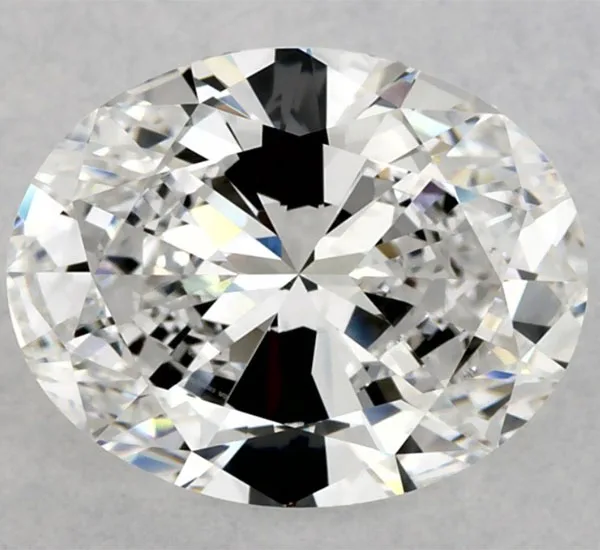
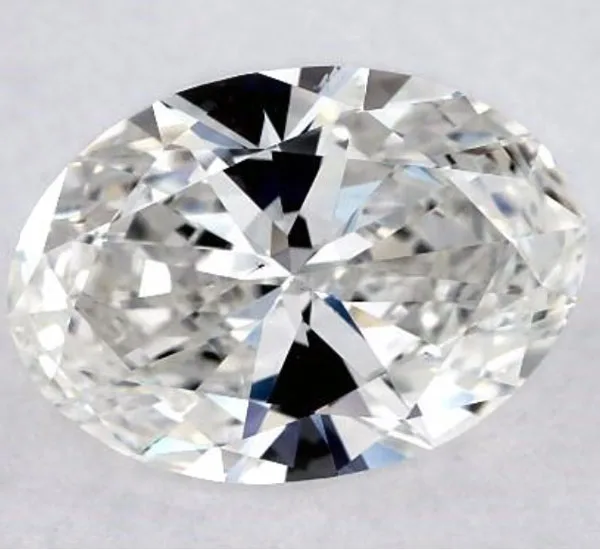
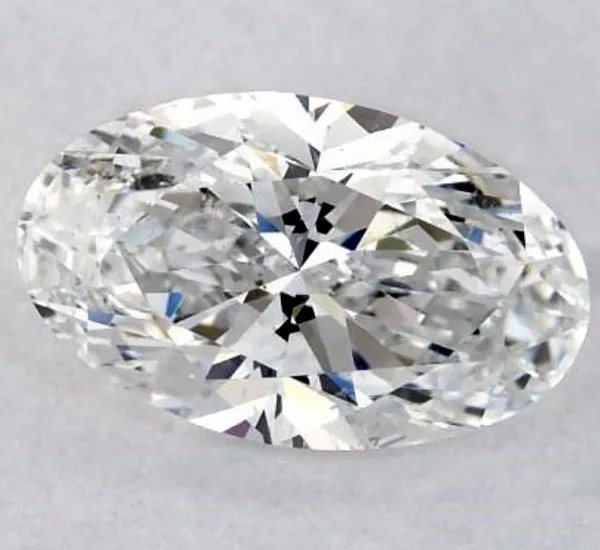
One thing you may find when looking for Oval Diamonds is that the majority will have a ratio of between 1.35 and 1.50, so if your preference is for a lower or higher ratio, you may need to look around.
Bow Tie Effect
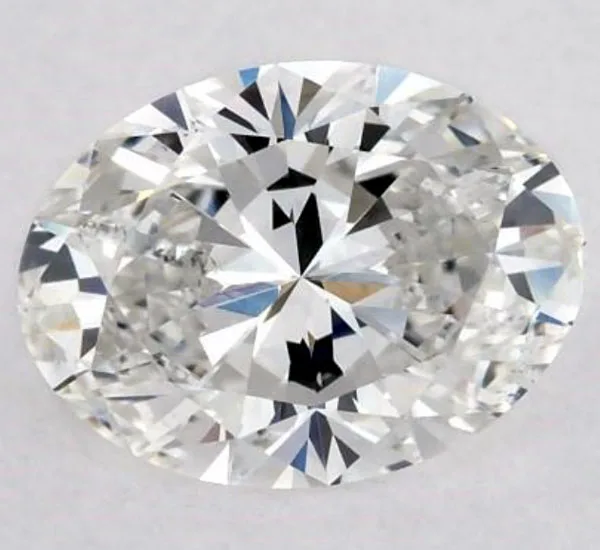
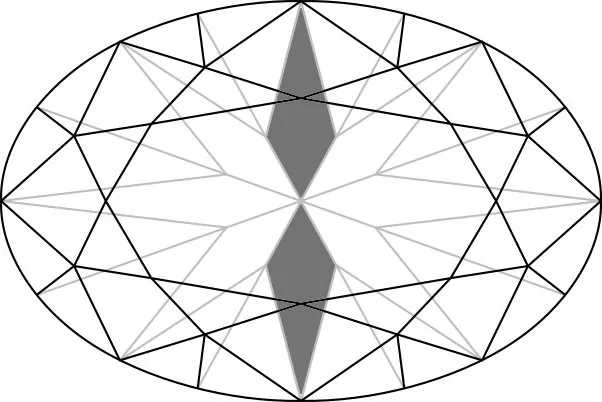
One of the biggest issues with Oval Diamonds is what is known as the bow tie effect, which is a dark area across the centre of the stone that resembles a bow tie.
What causes the bow tie effect in Oval Cut Diamonds?
It is actually a really simple answer… Reflections. The dark spot you see in the stone is the reflection of your head and shoulders if you are looking at the stone in person or the camera if you are looking at a picture/video.
And all Oval Diamonds have some degree of bow tie.
One thing to note is that it isn’t tied to cut quality, as some Excellent and ‘Ideal’ Ovals show a very noticeable bow tie (like the one pictured below), yet the stone with the 1.65 length-to-width ratio shows a very minimal bow tie but would be classed as having poor cut quality.
How Does Bow Tie Affect Price?
When looking through hundreds of Diamonds, I didn’t see any correlation between price-per-carat and whether the stone had a noticeable bow tie or not.
Fluorescence
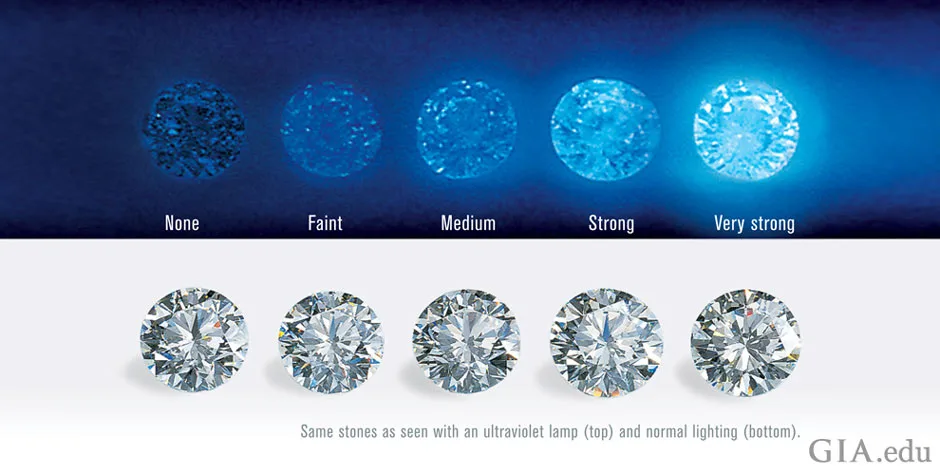
Fluorescence is one of the things that has a big impact on a Diamond’s price but is something that many people don’t really understand (including many within the industry).
This is because fluorescence only has a negative impact on a small number of Diamonds as it can give the stone a milky appearance but this only usually happens in stones that have very strong fluorescence and most retailers don’t sell these.
When Diamonds are graded, the fluorescence is checked and given a grade between None and Very Strong and even though most retailers don’t sell Diamonds with Very Strong fluorescence, there is still a big difference in price between a Diamond with no fluorescence and one with strong fluorescence.
Reports (Certificates)
Another factor that affects the price of a Diamond is whether or not it comes with a report (often incorrectly called a certificate).
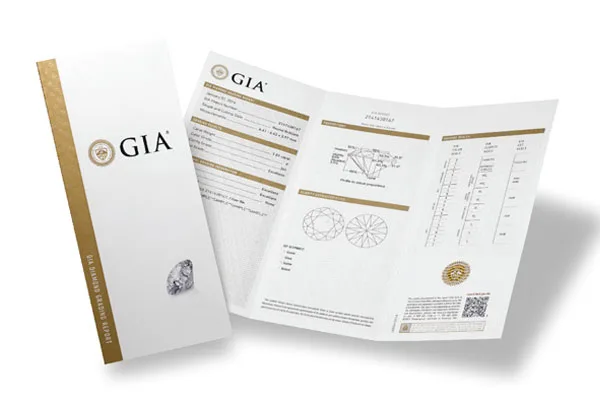
The reason why it affects the price is that a report contains information about the quality of the Diamond, such as the colour, clarity and size, which gives customers more confidence when buying a Diamond.
But not all reports are equal as a Diamond with a report from the GIA, which is regarded by many as the gold standard when it comes to gem labs, will have a higher price than the same quality Diamond with a report from IGI.
Most of the main retailers, especially ones that sell loose Diamonds only stock stones that come with GIA reports and I do recommend buying a Diamond with a GIA report.
Avoid Diamonds that are accompanied by any documentation that says Certificate or Certificate of Authenticity as reputable gem labs only issue reports.
Conclusion
As you can see, there are many different elements that affect the differences in Diamond prices and sometimes there can be very subtle differences that mean one Diamond is worth more than another, even though on paper they are of the same quality.
So when it comes to getting the best Diamond for your money, what do you need to look for:
- Colour – an F or G Colour Diamond will be colourless but won’t attract the premium of a D or E colour Diamond
- Clarity – a VS1, VS2 or good SI1 will look clean to the naked eye but won’t attract the premium of a VVS, IF or F Diamond
- Cut – Oval Cuts aren’t cut graded but I would recommend going for a stone with Very Good or Excellent Symmetry
- Reports – if possible, go for a Diamond with a GIA report but don’t buy the stone just from the information on the report, always look at the stone
- Fluorescence – not as big of an issue as some people make it out to be, in general only Diamonds with very strong fluorescence will have any kind of visual impact on the stone

I'm Paul Haywood FGA DGA, the owner and founder of Haywoods Gems, I'm a fully qualified Gemmologist and Diamond Grader from the Gemmological Association of Great Britain.