
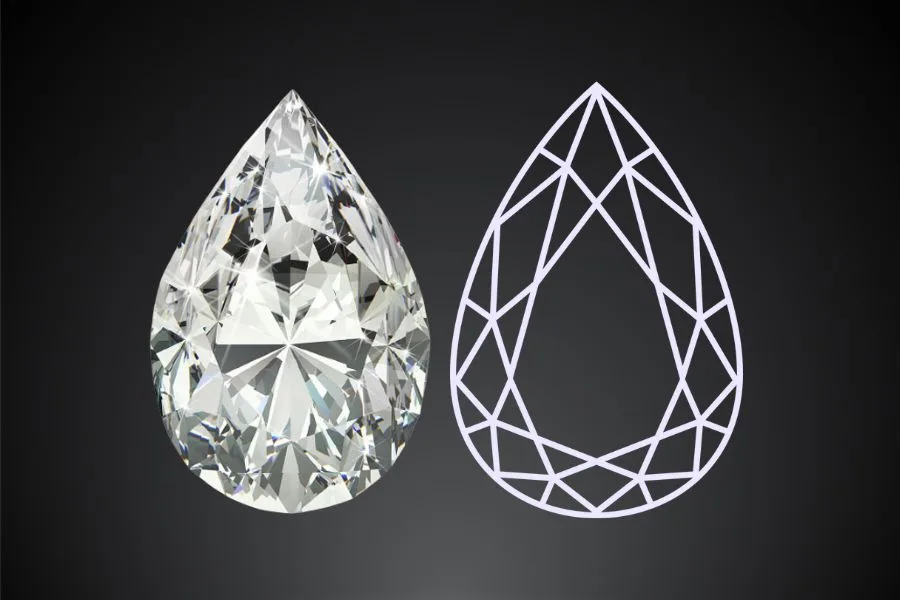
Pear Cut Diamond Guide – What You Need To Know!
Pear Cut Diamonds are one of the most beautiful, desirable and popular styles of cut and if you are looking for one of these stones, there are some things you need to know, which is why I created this guide.
If you are new to Diamonds, I would recommend checking out my Beginner’s Guide to Diamonds, as this covers all of the basics as this guide is focused on things relating specifically to Pear Cuts.
Table of Contents
Pear Cut Diamond Colour
When it comes to colour in Pear Cut Diamonds, there are a couple of things to be aware of:
- Due to the style of cut, colour is often more noticeable at the point of the stone
- In larger stones (weighing more than 2 carats), colour does start to become more noticeable in the body of the stone and some people may be able to see this in H colour stones
- If you want a colourless stone, then go for a D-G grade. H can also be colourless when face up but you would need to inspect the stone for yourself
Pear Cut Diamond Ideal Proportions
Currently, the GIA doesn’t give a cut grade for Pear Cut Diamonds but IGI does and this provides us with some useful information regarding the proportions they require for a stone to be given an Excellent cut grade, which can be seen in the table below:
| IGI Excellent | |
|---|---|
| Length to Width Ratio | 1.40 – 1.75 |
| Depth % | 57.5 – 65 |
| Table % | 55.5 – 63 |
| Crown Angle | 32° – 37° |
| Pavilion Angle | 38° – 42.5° |
| Girdle Thickness | Thin – Slightly Thick |
| Culet Size | None – Small |
It does need to be noted that proportions alone aren’t enough for a stone to be given an Excellent grade, they are also assessed on:
- How noticeable the bow tie is
- How much light the stone returns
It also doesn’t guarantee how good a stone will look, so these should be taken as guidelines only and there will be stones that fall outside of these proportions that will look amazing.
When it comes to GIA reports, they don’t provide the crown or pavilion angle, which is annoying, they only provide the total depth percentage, table size and girdle thickness.
Pear Cut Diamonds Length-to-Width Ratio
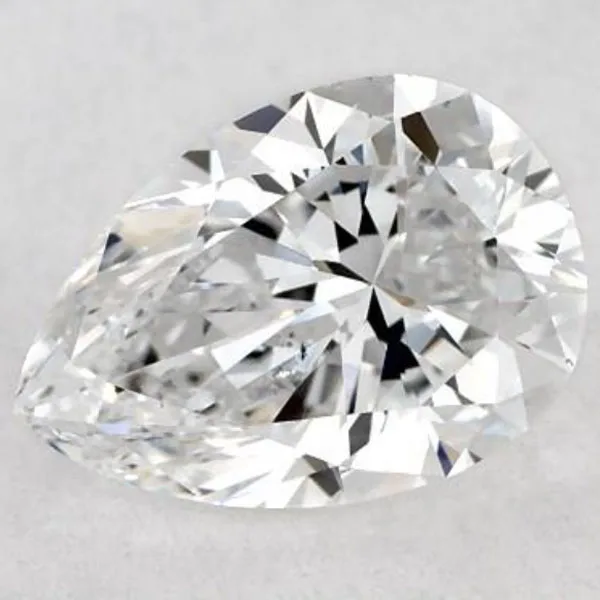
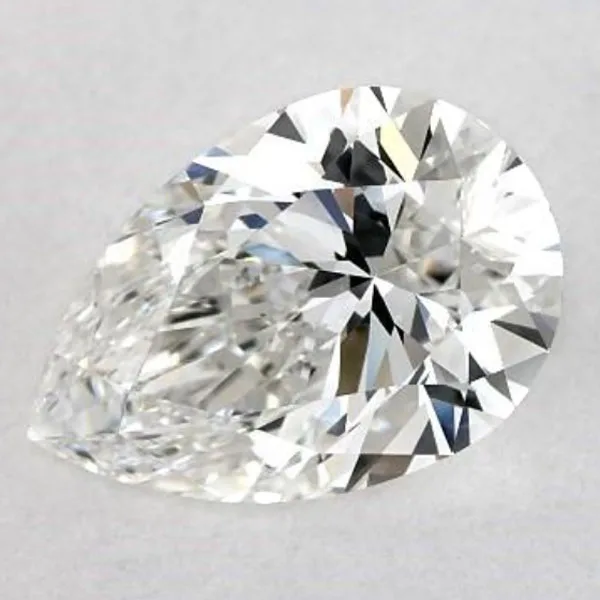
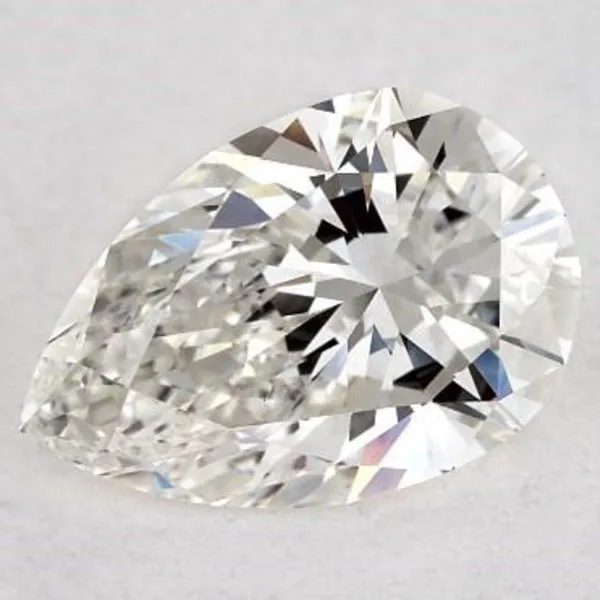
There is quite a wide range on the length-to-width ratio of what can qualify for an Excellent grade from IGI but the stones that fall into this range are going to be what people think of when they think of a pear shape.
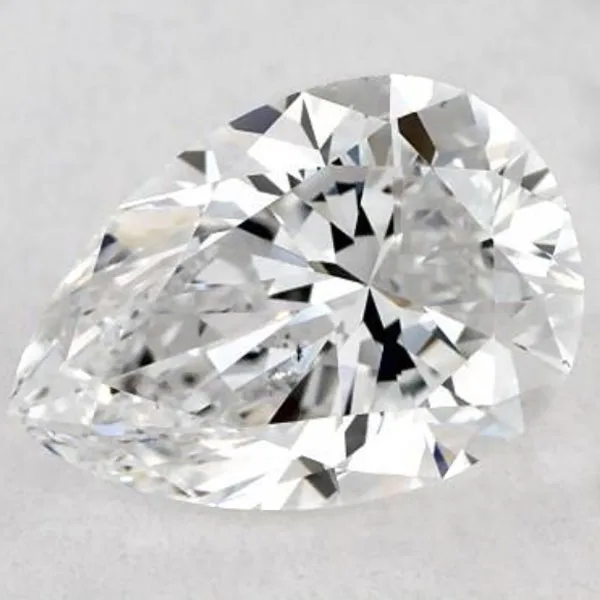
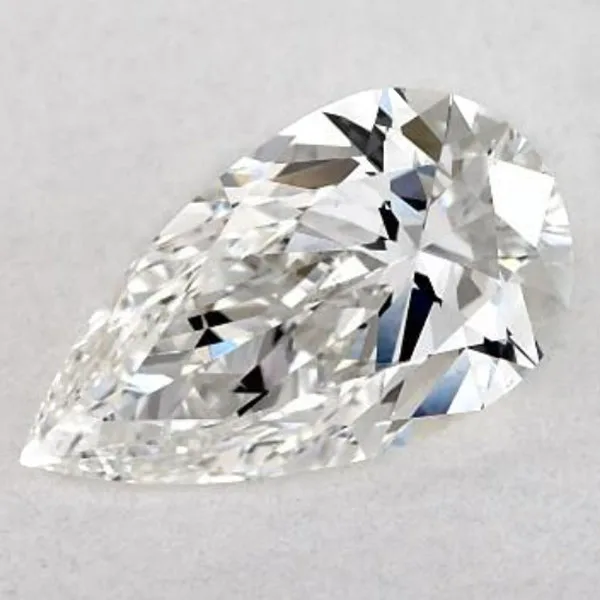
I managed to find examples at each end of the range in the images below and you can see that:
- The stone with the 1.42 ratio has a much rounder shape and the lower the ratio, the rounder the stone will be
- The stone with the 1.75 ratio has a much more elongated shape and the greater the ratio, the longer and slimmer the stone will look
As for which length-to-width ratio to go for? That all comes down to personal preference as some people prefer the look of one over the other but things like finger size can also be factored in, for example:
If you have long, slim fingers, a Pear with a higher length-to-width ratio can look really good.
Some people get a little bit obsessed with the length-to-width ratio, especially in relation to things like bow tie effect (more on that later) but it really doesn’t make a huge difference as there are plenty of stones with Excellent ratios that have a very obvious bow tie, so just go for the shape you like!
Pear Cut Diamond Shape
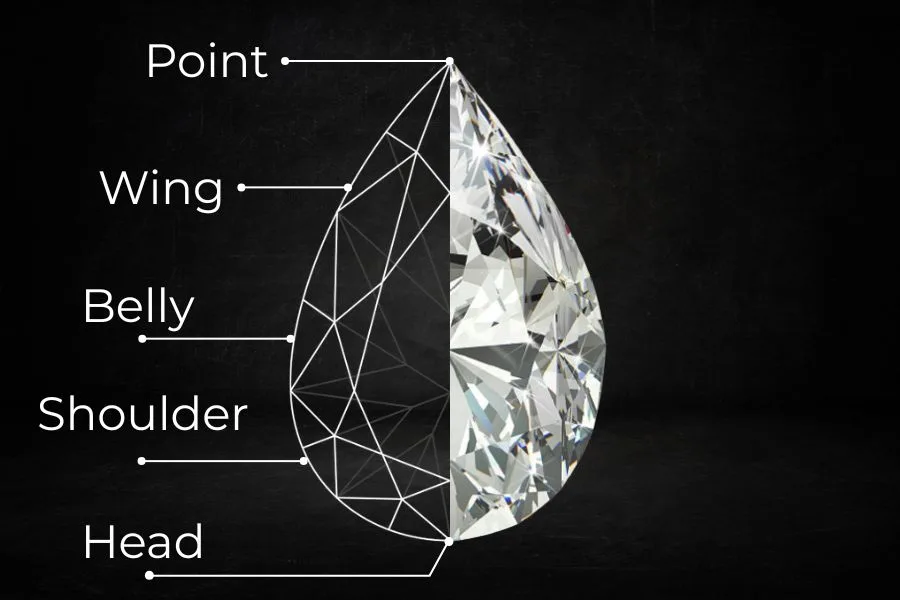
Following on from length-to-width is the shape of the Diamond.
Yes, they are shaped like a pear! But the outline of Pear Cuts can vary quite a bit depending on how the shoulders and wings have been cut.
- The shoulders affect how round the bottom half of the stone looks. Some stones can have more pronounced shoulders that gives the stone a squarer look.
- The wings affect the top half of the stone. Some stones can have wider wings, which can give the stone a more rounded look.
Once again, this comes down to personal preference as to what you like.
Pear Cut Diamond Depth Percentage
Depth percentage is another thing that some people seem to think is really important but unless the stone is extremely shallow or thick, it really isn’t that important.
But why? The total depth percentage (which is the combined crown height, girdle thickness and pavilion depth as a percentage of the width of the stone) doesn’t give enough information about the stone’s proportions.
The proportions that are helpful (crown height and angle and pavilion depth and angle) aren’t included on GIA reports.
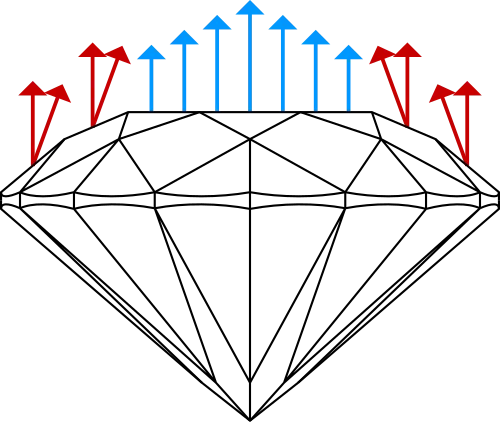
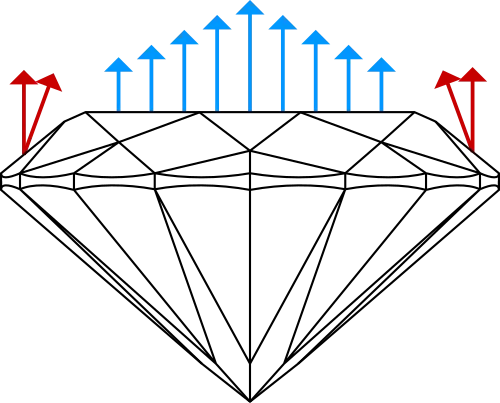
Pear Cut Diamond Table Size
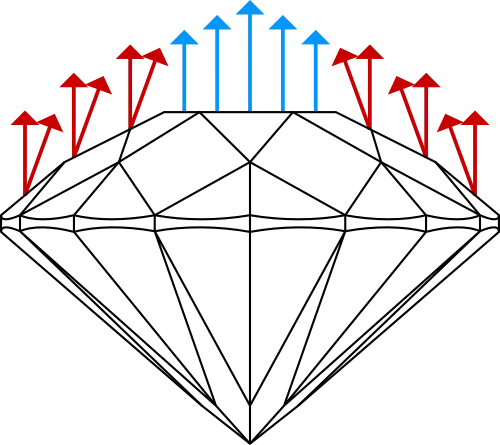
Table size is an important proportion as the size of the table impacts on how light interacts with the stone, as you can see in the images below:
Girdle Thickness
Girdle thickness is also something you want to pay attention to and ideally you want to buy a Diamond with a Thin to Slightly Thick girdle and you want to avoid:
- Extremely Thin girdles – due to being so thin, they can cause durability issues and the girdle can easily get chipped or damaged
- Extremely Thick girdles – these add additional weight to the stone but don’t add any size to the spread of the stone
Now you may notice on reports that they give a range, for example: medium to slightly thick, this is because there are slight variations in girdle thickness around the stone and the measurements give the smallest and largest measurement.
Bow Tie Effect In Pear Cut Diamonds
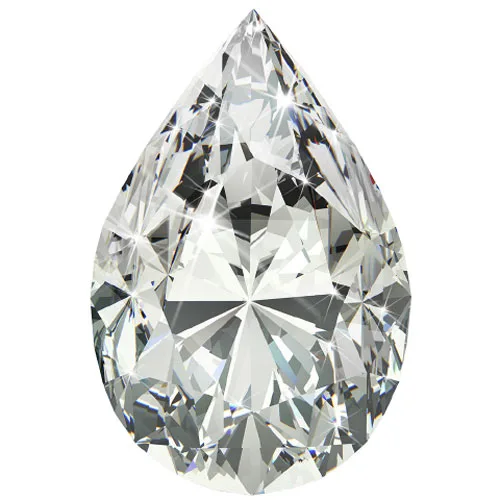
Now we get to an important visual effect that is seen in some degree in all Pear Cut Diamonds and that is the bow tie, which is a dark area that is seen across the centre of the stone but what causes this?
It is caused by reflections. If you are looking at the stone in person, this is your head and shoulder being reflected in the stone or if you see this on a picture/video (like the stone below), it is caused by the reflection of the camera.
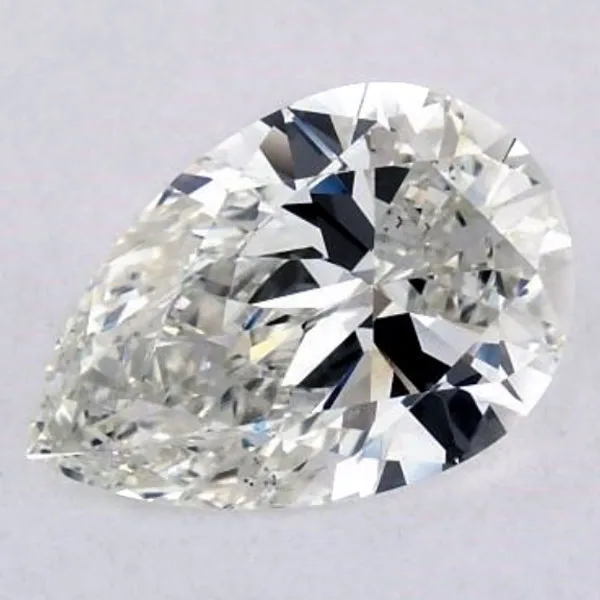
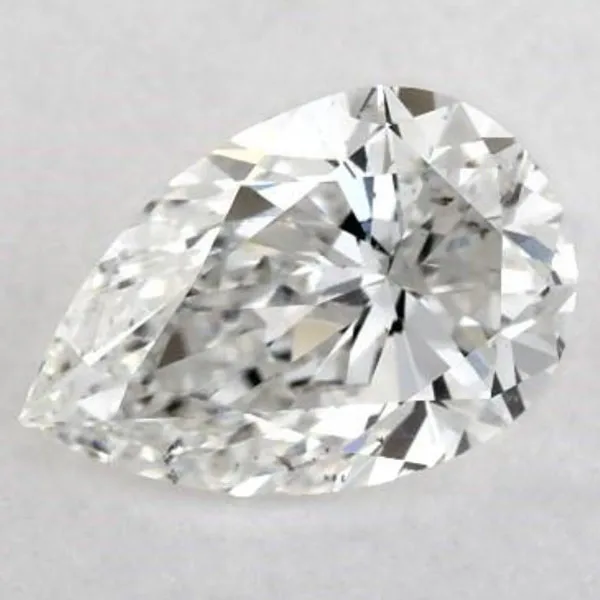
The next question is how can you avoid a bow tie in your Pear Cut Diamond?
As I said above, every stone will have some degree of bow tie but it does vary from stone to stone and the only way to find a stone with a minimal bow tie effect is to see the stone and look at it at slightly different angles, in different light sources.
Symmetry
Symmetry is an important grade for Pear Cut Diamonds and fortunately, the GIA does give a symmetry grade ranging from Excellent to Poor.
It is also one of the easier aspects of Diamond grading to understand as it is basically putting a line down the centre of the stone and checking if the left and right sides of the stone are the same and this is important as it not only impacts how the stone looks but also how light interacts with the stone.
Pear Cut Carat
The weight of the Diamond you buy is going to depend on your budget and generally, the more the stone weighs, the more expensive it will be but one thing to be aware of is that the weight of a Diamond doesn’t directly correlate to size.
And even though there are charts out there, such as my Pear Cut Size to Weight chart, these should only be used as guides as the proportions vary from stone to stone, meaning two stones can have the same length and width but slightly different weights.
0.5 Carat = 6.6 x 4.6mm
0.75 Carats = 7.3 x 5.4mm
1 Carat = 7.7 x 6.0mm
2 Carat = 9.6 x 7.6mm
3 Carat = 10.8 x 8.8mm
The images above aren’t to scale as this is very difficult to do with different sizes screens and resolutions!
Due to its somewhat unique shape, a well-cut 1-carat Pear Cut will have a larger outline than a 1-carat well-cut Round Brilliant, which can make it a good option for someone who wants their Diamond to have a bit more presence.
And as I mentioned earlier, the elongated shape means that Pear Cuts can be great option for people with longer, slimmer fingers.
Pear Cut Price
Prices for Pear Cuts are usually lower per carat than the equivalent Round Brilliant Cut and even though they rarely go out of style (it is a pretty timeless look!), they aren’t as popular as the Round Brilliant, which is why they are usually less per carat.
If you want to see the latest Pear Cut prices, then check out our Diamond Price guide, which I update every month.
Conclusion
I’ve covered everything you need to know in order to buy the right Pear Cut Diamond for you and this is the same whether you are buying and Natural or Lab-grown Diamond.
To summarize again, for the majority of buyers I would recommend buying a:
F or G colour (H is also worth considering)
VS1 – SI1 Clarity
A stone with a subtle or very faint bow tie
Excellent or Very Good Symmetry and Polish
A report from a reputable gem lab
If you have a very large budget or want the ultimate show-off Diamond, then go for a D Flawless or as close as you can get.

I'm Paul Haywood FGA DGA, the owner and founder of Haywoods Gems, I'm a fully qualified Gemmologist and Diamond Grader from the Gemmological Association of Great Britain.